




A piston check valve is a special safety valve that protects high-pressure factory pipe systems. Inside the valve, a sliding piston moves through a solid tube to stop backward fluid flow automatically. Installing this part protects your main pumps and large compressors from damaging reverse flows and sudden pressure spikes.
TANGGONG VALVE is a global leader in making high-quality fluid control equipment. Our team designs every strong valve to match strict international safety rules, including API 594 and API 6D. You get reliable daily operation, long-lasting strength, and excellent protection for your busiest industrial plants.
Key Takeaways
-
Piston check valves automatically stop liquids from flowing backward in high-pressure factory pipes.
-
Inside springs quickly push the sliding plug shut to stop harmful water hammer shocks.
-
Built-in liquid cushions absorb sudden heavy pressure movements to ensure quiet operation.
-
Inside guided tubes, moving parts stay straight so they do not jam or wear down unevenly.
-
Tough steel valve bodies can manage extreme temperatures ranging from freezing cold to scorching heat.
-
Strict testing rules guarantee trustworthy zero-leakage performance for the highest factory safety.
-
Correct valve sizing using actual liquid movement helps maintain the stability of inner components while working.
What Is a Piston Check Valve?
Definition and Core Design
Linear Motion Sealing Principle
Think of this safety unit as an automatic protector for your pipe systems. Forward fluid pressure pushes the internal plug straight upward to open the valve passage. This smooth sliding motion creates a tight seal as line pressure drops below regular operational levels.
Straight movement stops constant rubbing against internal parts inside the device. This active protection prevents fluid reversal and reduces wear on moving components. You get reliable shutoff performance that protects downstream equipment during sudden flow changes.
Basic Unidirectional Flow Control
This device acts as a self-moving safety valve inside high-pressure fluid lines. Pushing fluid lifts the internal disk off its seat to allow flow without manual help. Backward flow pushes the sealing disk down instantly to lock the line shut tightly.
You maintain constant single-direction movement throughout your process line. Fluid never travels backward into high-pressure pumps or sensitive measuring tools. This simple automatic mechanism protects industrial lines against unexpected backflow problems.
Essential Structural Components
Heavy-Duty Body and Bonnet Construction
TANGGONG VALVE offers over 36 years of manufacturing skill for high-pressure systems. Engineers build strong valve bodies using carbon steel like ASTM A216 WCB for basic temperatures. You can pick WC6 alloy steel or CF8M stainless steel for very hot or cold places.
Design compliance with ASME B16.34, BS 1868, and API 594 standards guarantees supreme structural strength under severe operational stresses.
For tough chemical exposure, you can choose Duplex 2205 steel to extend valve body life. Strong bolted caps make inside checks easy during normal service schedules.
Piston Plug, Cylinder, and Dashpot Design
The inner piston slides easily inside a smoothly shaped guide cylinder. Fluid fills the small space above the head to create a natural liquid cushion. This smooth cushion absorbs heavy fluid shocks whenever system flow shifts quickly.
The guided cylinder keeps the stem straight during fast movement cycles. Your system avoids internal sticking, disk rattle, and harmful shaking under high speeds. This steady movement lengthens total valve working life across many years.
Internal Spring and Seat Configuration
A strong internal spring rests right above the sliding plug. This spring helps close the valve fast before backward fluid speeds up. You stop damaging water pressure spikes across your whole pipe network easily.
Makers weld hard Stellite metal onto seat surfaces for extra wear defense. This tough metal layer resists fluid damage and sudden heat changes. You get lasting tight seals during tough high-pressure work conditions.
Working Principle of a Piston Check Valve
Fluid Displacement and Cracking Pressure
Overcoming Spring and Disc Resistance
Your pipeline relies on media pressure to move liquid through the one-way valve. Upstream fluid enters the body and pushes against the bottom of the plug. The fluid force must build up to push past the internal spring and disc weight.
According to a guide on check valve selection, for a piston-style check valve, the typical cracking pressure range is between 1 and 10 psi.
Once upstream pressure hits this limit, the force lifts the disc off its seat. This opening action allows your process media to pass into the upper cavity right away.
Establishing Unrestricted Flow Path
Steady pressure pushes the internal plug upward along its central axis. The moving plug slides inside the cylinder to clear the main flow chamber. Your fluid then moves around the plug guide without structural resistance or flow disturbance.
Proper flow speed holds the internal assembly in a steady open position during active service. The internal spring stays squeezed as long as pressure stays above the opening limit. You get a continuous flow path that protects upstream equipment during normal operation.
Steady Flow and Cushioning Effect
Damped Piston Elevation
Fluid enters the internal chamber above the guide assembly during active lifting. This trapped fluid creates a hydraulic cushion inside the dampening cylinder during upward movement. The fluid layer slows the upward stroke to prevent hard metal impact against the top cover.
Smooth disc movement protects internal parts from mechanical shock during sudden pump startup. Your system absorbs active pressure energy without passing structural stress into nearby pipe walls. This smooth motion lengthens total service life across tough industrial setups.
Dashpot Effect to Eliminate Vibration
The internal cylinder acts as an automatic shock absorber during continuous fluid movement. Trapped media drains through small gaps around the upper cylinder walls at a controlled rate. This fluid movement smoothes out fast pressure changes caused by upstream pumps or compressors.
Steady internal parts prevent constant disk rattle and violent system shaking. Your pipe network maintains quiet performance under rough media conditions. This automatic dampening feature preserves internal alignment without needing extra power or manual adjustment.
Backflow Prevention and Fast Shutoff
Flow Deceleration and Spring Response
Slowing flow causes the internal spring to push quickly toward the main seat. Swing check valves react slower than piston check valves during sudden pump shutdowns. The compressed spring drives the plug downward before liquid reversal gains backward speed.
Fast physical closure stops damaging fluid surges from moving backward through your system. You protect vulnerable pump impellers from severe mechanical shock caused by reversed flow speeds. This immediate spring reaction keeps system stability during emergency shutdowns.
Metal-to-Metal and Soft Seat Tight Sealing
The downward sliding plug makes firm contact against the fixed seat ring. Line backflow pressure pushes down on top of the plug to press sealing faces together. This physical force stops backward leakage and completes vital check valve duties across high-pressure utility networks.
Hard metal seat surfaces keep tight contact under high heat loads and extreme line pressures. Rubber soft seats give total leak-free shutoff during lower pressure gas operations. You get reliable pressure control that protects workers and equipment from dangerous line reversals.
Main Advantages of a Piston Check Valve
Superior Control of Water Hammer
Fast Non-Slam Closing Action
Fast-moving fluid causes harmful shockwaves when a pump turns off without warning. An internal spring-loaded disc quickly pushes the heavy plug against its seat. You block backward liquid movement before high pressure spikes can damage your system.
TANGGONG VALVE crafts accurately machined piston parts for big industrial facilities. This smart design stops disc rattling when liquid changes direction fast. You cut down on repair work while keeping fluid moving smoothly.
Shock Absorption During Bumpy Flow
Pumps moving back and forth cause steady liquid pulses during normal daily use. An inner dashpot cushions liquid motion inside the top chamber naturally. This trapped fluid slows plug movement to protect nearby pipes from sudden impacts.
Your pipe network stops shaking because of built-in fluid damping features. Controlled movement balances pressure shifts across all your connected pipes. You protect system parts without buying costly extra equipment.
Excellent High Pressure and Temperature Endurance
Class 150 to Class 2500 Pressure Ratings
Big industrial plants work under super high pressures every single day. Strong forged and cast steel bodies handle tough physical forces easily. You can pick pressure levels ranging from Class 150 up to Class 2500.
Thick metal walls shield critical tools from sudden pressure increases inside. Sturdy top caps keep tight seals even through rough operating conditions. You ensure safe long-term work across all your high-pressure pipe systems.
Freezing Cryogenic to Very Hot Temperature Resistance
Extreme liquids can weaken metal parts in regular industrial valve designs. Special metal alloys handle extreme temperatures safely from -196°C up to 600°C. You get strong physical defense inside freezing or burning hot environments.
The following table is for the allowable closure leak value testing with water at 1.1 times rated pressure and gas at low pressure (about 80 psig) or high pressure if specified by customer.
Steady Alignment and Very Low Leakage
Guided Cylinder Setup Prevents Jamming
Bad inner alignment makes valve parts jam during non-stop pipeline use. Fully guided stems keep moving in a straight line inside smooth cylinder walls. You get exact disc seating every single time the valve closes.
Smooth sliding action stops risky sticking caused by heat swelling. Straight alignment prevents uneven seat wear through thousands of working cycles. You receive trustworthy protection when important emergency shutdowns happen.
Zero-Leakage Performance to API 598 Standards
Strict factory pressure testing using ISO 5208 and API 598 rules ensures total system reliability. Every single check valve undergoes tough pressure checks to keep pipelines safe. The following table shows allowed leakage amounts:
|
Size (NPS) |
Liquid Test (ml/min) |
Gas Test (m3/h) |
Gas Test (ft3/h) |
|---|---|---|---|
|
2 |
6 |
0.08 |
3 |
|
3 |
9 |
0.13 |
4.5 |
|
6 |
18 |
0.25 |
9 |
|
8 |
24 |
0.34 |
12 |
|
10 |
30 |
0.42 |
15 |
|
12 |
36 |
0.5 |
18 |

Tight seating stops product loss and maintains steady pressure across your entire factory operation. You protect nearby workers and tools from dangerous fluid spills. A tough check valve brings quiet, reliable safety.
Piston Check Valve vs. Other Check Valve Types
Piston Check Valve vs. Swing Type
Response Speed and Surge Suppression
Speed matters when picking safety parts for high-pressure systems. Spring assistance lets guided plugs travel short distances to shut fast. This quick motion blocks backward fluid before dangerous pressure spikes build up.
Hinged swing discs move through wide arcs to shut off flow lines. Basic swing models often trigger water hammer when lines close quickly. Heavy discs slam against seat rings, sending harsh mechanical shock across pipes.
High-Velocity vs. Low-Velocity Flow Performance
Fast fluid lines run better using parts pushed by internal springs. Steady springs keep plugs still during high-turbulence cycles. You stop disc chatter while cutting down wear inside fast-moving systems.
Swing models work best in steady, slow-moving fluid lines. Swinging discs open wide to keep pressure drops very low. Frequent flow changes wear out hinge pins and reduce overall tool reliability.
Piston Check Valve vs. Ball Type
Viscous and Pulsating Media Handling
Fluid thickness affects how well safety valves work in factories. Rolling balls clean themselves inside small valve chambers. This simple round shape handles dirty, thick liquids with ease.
Ball designs handle thick liquids well, while piston check valve units excel in pulsating flows.
Pumping compressors generate fast pressure waves inside gas lines. Quick springs help sliding plugs react right away to pulsing waves. Your equipment stays safe from backflow without creating extra noise.
Seating Wear and Service Life Comparison
Constant pressure waves shake round balls against inner wall guides. Extra movement wears out seating surfaces inside high-pressure systems. You face noisy operations and frequent repair stops under heavy pressure.
Guided cylinders keep internal parts straight during every movement cycle. Hardened metal seats resist damage from high-pressure fluid streams. You get dependable sealing and longer service life in important process lines.
Piston Check Valve vs. Dual Plate Type
Pressure Drop Characteristics
Internal body shapes change how much fluid pressure drops. Dual plate models put two spring plates inside the flow stream. This smart layout lowers turbulence to keep pressure drops very small.
Piston models force moving fluid around an inner guide tube. Changing flow paths creates extra resistance compared to dual plate designs. Choosing Y-type bodies improves flow efficiency when pressure loss matters most.
Compactness and Installation Orientation
Dual plate models use thin wafer bodies that save space. Short body shapes fit easily between small pipe flanges. You can install dual plate parts in flat or upright lines easily.
Piston models use thick forged bodies built for tough jobs. Solid metal walls provide maximum strength against high line pressures. You must follow alignment rules to keep internal parts sliding smoothly.
Critical Industrial Applications
Power Generation and Steam Lines
Boiler Feedwater and Condensate Protection
Power plants need strong controls to protect valuable factory gear. Installing a piston check valve keeps hot steam lines and water systems safe. Internal springs push the plug shut when supply pumps shut off without warning.
Water return lines face hot temperatures and strong fluid shocks. Using these cushioned valves shields expensive pumps from strong backpressure spikes. The internal liquid cushion stops pipe damage across busy power networks.
High-Pressure Steam Isolation
Hot steam pipes run under extreme pressure levels every day. You stop dangerous steam from rushing backward during sudden system failures. Strong steel bodies handle hot heat cycles without bending out of shape.
Hard metal seats ensure total safety when blocking steam lines. The unit works automatically without needing extra manual control. Fast closing actions keep workers safe and prevent costly plant shutdowns.
Oil, Gas, and Petrochemical Processing
Compressor Discharge Line Protection
Pumping gas compressors send strong pressure waves down outflow pipes. Placing a strong safety valve near compressors tames these fast pulses easily. Smooth inner guides hold parts steady during continuous daily use.
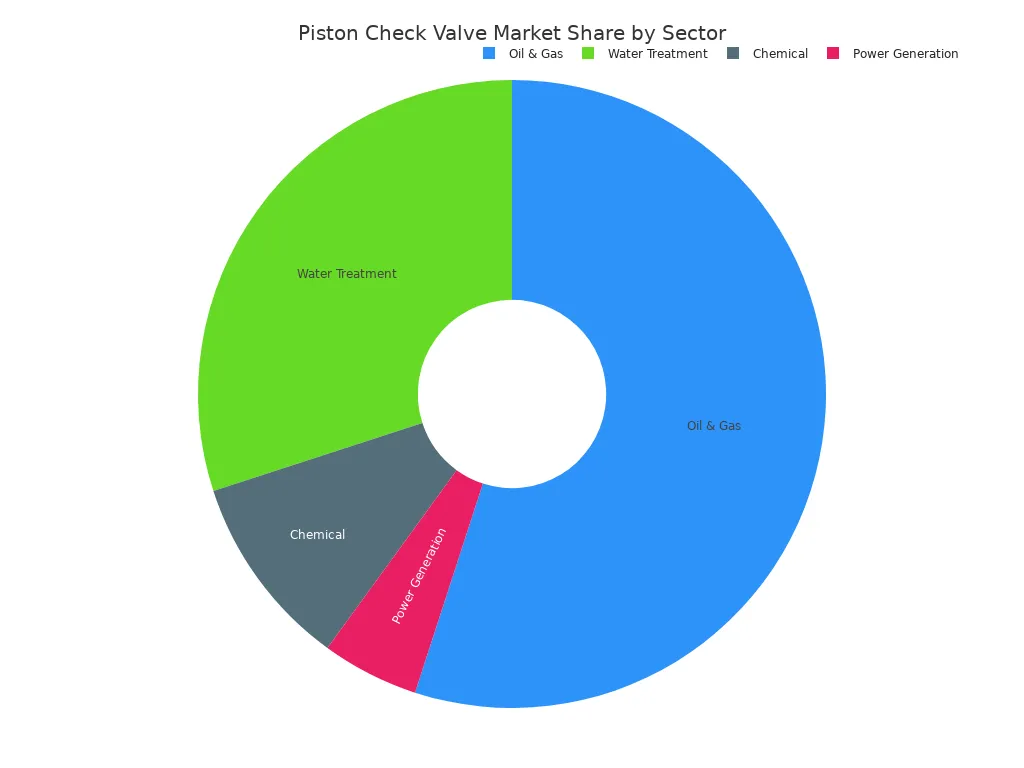
Huge fuel demand makes gas plants the primary buyers of these tools. Energy companies buy around 55% of all piston check valves worldwide. You block backward pressure before it ruins expensive compressor parts.
Refining and Offshore Pipeline Networks
Oil refineries work with risky chemicals under severe heat stress. Tough steel alloys help prevent dangerous chemical leaks into the air. Straight inner guides keep fluid moving smoothly through ocean and land pipes.
High-pressure pipe networks need tight seals to protect nearby nature. Strong internal parts reduce the need for sudden factory repairs. Hardened metal seats resist scratching from sand and rough particles inside raw oil.
Heavy Utilities and Water Treatment
High-Head Water Pumping Stations
City water systems move huge amounts of liquid over long distances. Water treatment plants buy about 30% of these flow control units. You stop destructive water hammer when main water pumps turn off suddenly.
Built-in fluid cushions soften fast valve shutoffs inside tall water pipes. You protect long city pipes from cracking during sudden pressure surges. Quiet internal movement cuts down shaking across local water facilities.
Chemical Injection and Hazardous Gas Handling
Chemical plants use about 10% of these safety valves worldwide. Power plants make up around 5% of all installed units. Special metal bodies let you handle harmful chemicals and harsh gases safely.
Tight seals keep dangerous liquids from leaking into clean utility pipes. You protect chemical pumps from dirty backflow whenever line pressure drops. The spring-driven plug seals tight instantly to keep factories safe.
Selection and Installation Guidelines
Sizing and Differential Pressure Factors
Calculating Minimum Flow for Full Lift
You must pick your valve size using real fluid flow instead of simple pipe measurements. Low flow speeds stop the inner plug from lifting all the way off its seat. You calculate the smallest flow speed required to push the plug up fully during regular daily work.
Picking a valve that is too big makes the plug tap non-stop inside its cylinder. This constant shaking hurts inside seating parts and shortens total tool life quickly. Correct sizing keeps all inner moving parts wide open and steady while pumps run normally.
Flow Coefficient and Pressure Drop Balance
You must check flow ratings to predict fluid pressure loss across the valve assembly correctly. High flow resistance forces main system pumps to waste extra electrical energy every day. You balance needed pressure drops with proper spring forces to keep systems working safely.
Inner fluid paths block moving liquid slightly during regular forward flow through the body. Selecting a smooth flow path reduces unwanted liquid turbulence inside high-pressure fluid lines. You get high flow volume while keeping strict backflow safety for critical equipment.
Piping Layout and Orientation Considerations
Horizontal vs. Vertical Upward Installations
Pipe design directly changes inner component wear and overall valve performance over long service lives. You should place flow control tools inside flat horizontal pipes whenever possible for smooth motion. Good positioning stops uneven cylinder wear and keeps inner parts sliding without sticking.
You must check your exact pipe direction before making your final valve choice and setup. The following table outlines standard installation practices and key considerations for common piping layouts:
|
Installation Orientation |
Recommended Practice |
Key Considerations |
|---|---|---|
|
Horizontal |
Commonly preferred. |
Standard configuration for reliable operation. |
|
Vertical Upward Flow |
May be acceptable. |
Depends on specific valve design. A spring-assisted design is often recommended to ensure reliable closure at low differential pressure and during flow reduction. |
Connection Types Including Flanged, BW, and SW
You can pick from several strong end connection styles based on system pressure needs. Flanged ends let workers remove valves easily during regular factory checkups and repairs. Raised face or ring-type joint flanges make strong leak-free joints for high-pressure industrial lines.
Butt weld and socket weld options give permanent seals for extreme heat work environments. Welding pipe ends straight into thick metal walls removes potential flange leaks in high-heat steam lines. You pick socket welds for smaller pipes and butt welds for large heavy pipes.
A piston check valve provides you with robust non-slam protection against dangerous backflow in high-pressure environments. This automatic non-return unit combines fast spring action and hydraulic cushioning. You eliminate damaging water hammer surges and safeguard your vital pumps during sudden shutdowns. Guided internal components ensure exact disc alignment, tight seat integrity, and long operational life under extreme conditions.
TANGGONG brings you over 36 years of precision manufacturing expertise. We build every industrial product to strict international standards like API 594 and API 6D. You receive certified check valve solutions customized to meet your toughest piping challenges with maximum safety and reliability.
FAQ
How does a piston check valve prevent water hammer?
Backpressure builds up in your pipes if a pump stops unexpectedly. An inner spring pushes the guided plug down before liquid turns back. Liquid inside the top chamber absorbs the heavy movement. This fast, gentle closing stops dangerous pressure spikes across your entire pipe setup.
Where do engineers normally install this equipment?
Placing this device inside flat pipes ensures smooth straight movement. Special spring models can also operate inside vertical upward pipes. Engineers often use them in steam control systems, boiler water lines, and outflow pipes for gas compressors.
What critical check valve functions protect your machinery?
Key valve tasks include stopping backward flow, soaking up shocks, and keeping steady pressure. Quick closing guards pump parts against backward liquid force. You prevent costly tool damage and keep your plant running smoothly during power loss.
What pressure ratings can these units handle?
Strong steel bodies handle high pressure forces without breaking. Under ASME B16.34 rules, you can choose pressure levels from Class 150 to Class 2500. Heavy metal walls keep your high-pressure pipe systems safe and under control.
Can these units operate under extreme temperatures?
Yes, they can. Makers build tough bodies using special metals like CF8M stainless steel and Duplex alloys. These parts work safely across wide temperature ranges, from freezing cold at -196°C to burning heat at 600°C.
What standards govern factory pressure testing?
Factories run tough pressure tests following API 598 and ISO 5208 rules. These standards set the allowed leaks for liquids and gases. Every approved valve ensures a tight seal and reliable safety inside busy industrial plants.
How do you choose between soft seats and metal seats?
Hard metal seats resist hot temperatures, rough fluids, and constant inner wear. Soft rubber seats offer completely leak-free sealing in lower pressure gas lines. You pick the right seat based on your system heat, line pressure, and liquid clean level.