



A swing check valve is a self-moving, non-return valve. You use it for one-way flow in pipes. Fluid pressure pushes it open. It closes automatically. This stops reverse flow. Preventing backflow keeps your pumps safe. It protects your important tools from damage.
TANGGONG VALVE has over 36 years of experience. We make industrial valves for the world. You can trust our approved engineering solutions. They work well for tough fluid systems. You need to know how these automatic valves work. Also, check their key design traits and strong materials. Learn about their uses and correct setup rules. Good knowledge ensures safe and steady system performance.
Key Takeaways
-
Swing check valves automatically stop fluid backflow. They keep your pumps safe. They also protect tools from damage.
-
Pick spring-assisted valves to stop quick water hammer. They protect pipes from high pressure.
-
Put swing check valves in flat pipes. Or put them in straight up pipes. Make sure the fluid flows upward. This helps the valves close right. It works all by itself.
-
Do regular maintenance and check the valve visually. This helps stop seat leaks. It also helps your valve last longer.
Understanding Swing Check Valve Technology
Definition and Primary Functionality
You can learn swing check valve design easily. Look inside at its moving parts. The valve works all by itself. Pipeline pressure makes it run automatically. Moving fluid pushes on a swinging disc. This force lifts the hinged disc up. It moves off the valve seat. You need no extra power for this. Electric power is not needed at all. Manual help is not required either.
The main job is keeping fluid moving. It blocks any dangerous backflow. The valves keep fluids moving one way. They protect pipes from backflow damage. This process ensures safe one-way flow. The weighted disc swings shut quickly. It lands right back on its seat. This happens when forward pressure drops. Reverse pressure also closes the disc. Thus, you protect your upstream pumps. Meters and compressors stay safe too.
Swing Check Valves vs. Other Non-Return Valves
Pick the right non-return valve carefully. This choice improves your piping performance. It also keeps flow capacity high. Swing check valves cause very little drag. Fluid moves through with low pressure loss. Fully open swing check valves drop pressure. Piston check valves drop much more pressure. The flow coefficient (Cv) is very important. It estimates pressure drops at your flow rates. Use this rating for correct valve sizing. This step brings high flow efficiency.
Various non-return valves act differently in systems. Piston check valves force fluid through channels. These narrow paths increase total fluid drag. Wafer check valves limit fluid flow more. They restrict flow more than swing valves. In contrast, swing check valves open fully. The disc swings out of the path. Thus, you get great fluid movement. You also lower energy strain on pumps.
Working Principles and Internal Components
Fluid Dynamics of Fluid-Driven Disc Opening
You can understand working principles of internal fluid dynamics by observing movement through the pipeline. Incoming fluid creates kinetic energy inside the valve body. Forward fluid pressure hits the wide disc surface directly. This fluid force overcomes downward gravity and overall disc weight. The fluid pushes the unattached disc upward around its hinge pin shaft. Media moves smoothly past the open valve seat as the disc swings out of the primary flow path.
Fluid speed directly controls internal disc movement and position. You can see how mass flow rates alter disc stability and opening angles in the dynamic table below:
|
Mass Flow Rate (Fluid Velocity) |
Opening Angle Dynamics |
Disc Stability Behavior |
|---|---|---|
|
High Flow Rate |
Rapidly opens to 100% (fully open) and maintains full aperture. |
Highly stable; remains fully open without experiencing any disc oscillation. |
|
Low Flow Rate |
Reaches 100% opening initially (~0.7 s), holds for ~3 s, then slightly reduces and settles at 94.3%. |
Remains stable overall without severe fluctuations (unlike tilting valves), stabilizing cleanly at a reduced angle. |
High fluid velocity holds the internal disc up completely inside swing check valves. Low fluid velocity opens the swing check valve disc quickly before it settles smoothly at a stable 94.3% opening angle. The system maintains continuous unidirectional flow without experiencing heavy disc flutter.
Automatic Seating and Reverse Flow Prevention
You gain automatic protection when forward fluid momentum drops inside the pipe. Gravity constantly pulls the raised disc assembly downward toward the port. The disc swings back toward the seating ring when forward velocity slows down. Pressure behind the disc drops below outlet pressure, and fluid attempts to travel backward through the chamber. This reverse fluid pressure forces the disc tightly against its metallic sealing seat.
Automatic closure protects your sensitive upstream pumps from backflow damage. The core working principles rely entirely on natural line pressure differences across the disc face. The swing check valve disk seals instantly against the body seat. You prevent backflow efficiently without adding extra manual controls or external power sources. This rapid mechanical seating isolates high-pressure downstream lines during sudden pump shutdowns.
Key Design Features of the Anatomical Assembly
You can evaluate key design features by inspecting the complete internal valve assembly. A typical swing check valve houses five major internal parts inside its sturdy pressure boundary:
-
Body: The heavy outer shell contains internal fluid pressure and connects directly to your pipeline flanges.
-
Disc: The movable round closure element swings smoothly on a hinge pin to permit or block fluid flow.
-
Hinge Pin: The strong horizontal shaft supports the hinge arm and allows full rotational swinging motion.
-
Valve Seat: The precision-machined inner seating ring forms a tight liquid seal with the closed disc.
-
Bonnet: The removable top cover panel grants fast access for internal valve inspection and field maintenance.
These components operate together under strict performance metrics. Simple working principles guarantee minimal wear and low maintenance needs. Skilled engineers design the internal hinge pin assembly with ample running clearances. Free rotation prevents disc binding during long operation cycles. Premium swing check valves utilize metallic or soft seating materials to secure reliable leak-free sealing performance across various line pressures.
Key Design Features of TANGGONG Check Valves
TANGGONG VALVE makes tough tools for busy pipes. We build items from size DN15 to DN1200. These sizes match ½ inch up to 48 inches. Pressure levels range from Class 150 to Class 2500. These equal PN10 up to PN420 ratings. You can pick great design features for your needs.
Standard Flanged Swing Check Valves
Flanged swing check valves give strong support in high-pressure networks. These units meet strict API 6D design rules. They also meet ASME B16.34 specs. Builders make them to fit ASME B16.10 length rules. They match API 594 end-to-end rules too. Global projects often need ISO 5752 rules. These include the DIN 3202-F4 group. Engineers also use rules like BS 1868. They apply ISO 15761 standards as well. Plus, they follow MSS SP-71 rules.
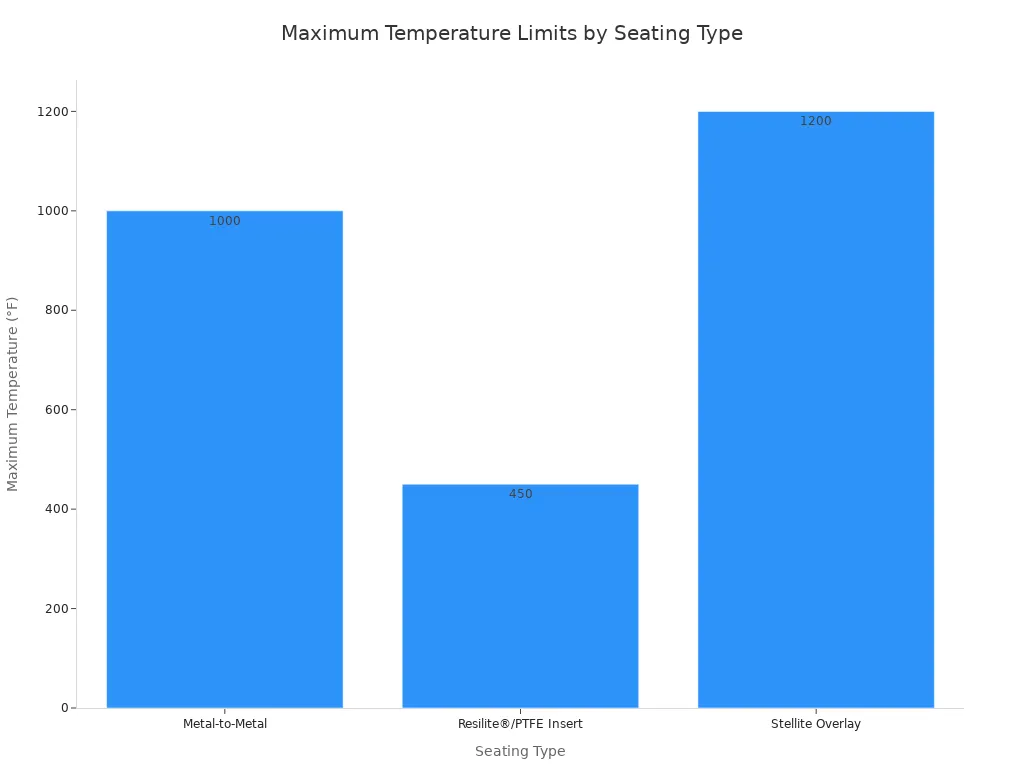
You can pick special seat materials based on heat:
|
Seating Type |
Applicable Pressure Rating |
Maximum Temperature |
Primary Application |
|---|---|---|---|
|
Metal-to-Metal |
Class 150 to Class 2500 |
1000°F (538°C) |
Steam systems, elevated-temperature hydrocarbons |
|
Resilite®/PTFE Insert |
Class 150 to Class 900 |
450°F (232°C) |
Water treatment, chemical processing, zero-leakage requirements |
|
Stellite Overlay |
Class 800 to Class 2500 |
1200°F (649°C) |
Highly erosive media, slurry pipelines, sand-laden crude |
A strong flanged swing check valve offers long service. The top bonnet allows quick inside parts checks.
Compact Wafer and Y-Pattern Variations
Small pipe layouts need space-saving options. Wafer swing check valves fit right between pipe flanges. They match API 594 size rules. Their light build lowers pipe stress. ISO 5752 rules set short end-to-end lengths.
Y-pattern swing check valves have a slanted inner path. This smooth shape helps liquid move well. It reduces rough flow inside. Top-hinged options allow easy access to inner parts. You can do quick repairs easily. You do not remove the valve body from pipes. Compact swing check valves protect pumps in small spaces.
Non-Slam Spring-Assisted Configurations
Fast flow pipes can get hit by water hammer. TANGGONG VALVE solves this with spring-assisted valves. Fluid pressure squeezes the inner spring during forward flow. The spring opens fast when flow speed drops. This motion pushes the disc gently onto the seat.
-
Spring Force Dynamics: The spring pushes the disc right when flow slows. This creates quick shutoff before backflow starts.
-
Short Travel Distance: A short-moving disc cuts travel time down. This quick action stops flow fast. It reduces pressure spikes and part wear.
Regular check valves close after backflow builds up. That fast movement causes hard hits. It creates high pressure spikes. Spring-assisted systems start closing when forward speed drops. The disc moves a short distance to close early. This setup stops shock waves. It halts bad shaking. Picking a spring-loaded swing check valve helps tools last longer.
Material Selection and Design Standards
Body Materials: Cast Carbon Steel, Stainless Steel, and Duplex Alloys
Pick the right metal shell for your pipe. Fluid heat and chemicals shape your choices. Carbon steel handles normal uses well. Stainless steel stops strong chemicals. Duplex alloys resist harsh rust. This guide shows how metals act.
|
Parameter |
Cast Carbon Steel (WCB / LCB) |
316 Stainless Steel (CF8M) |
Duplex / Super Duplex Stainless Steel (2205 / 2507 / F50 / F51) |
|---|---|---|---|
|
Maximum Continuous Temperature |
~425°C |
~800–850°C (Up to 1500°F / 816°C) |
~300°C |
|
Minimum Continuous Temperature |
~-29°C (WCB) / ~-46°C (LCB) |
Down to ~-196°C (-425°F / -254°C) |
Down to ~-40°C |
|
General Corrosion Resistance |
Low (requires protective coatings) |
Very High |
Very High to Excellent |
|
Chloride & Pitting Resistance |
Poor |
Good (molybdenum addition enhances resistance) |
Very Good to Excellent (superior to 316) |
Carbon steel holds general pipe power safely. Stainless steel protects super cold fluids. Duplex metals guard salt water pipes best.
Sealing Surfaces: Hard-Faced Metal vs. Elastomeric Soft Seats
Select inner seats by heat and leaks. Soft seats use rubber for zero leaks. Metal seats use hard coatings for heat.
|
Seat Material Type |
Material Name |
Shut-off Class (Leakage Rate) |
Temperature Range |
|---|---|---|---|
|
Soft Seat |
PTFE |
Class VI (Bubble-tight, zero leakage) |
-29°C to 200°C |
|
Soft Seat (Elastomer) |
NBR (Buna-N) |
Class VI (Bubble-tight, zero leakage) |
-30°C to 120°C |
|
Hard-Faced Metal Seat |
Stellite 6 |
Class IV or V (Measurable minor leakage) |
-196°C to 815°C |
Soft PTFE seals fluid completely. Metal Stellite 6 resists hot steam. It stops rough mud wear too.
Compliance Standards: API 6D, API 594, ASME B16.34, and ISO 9001
Official rules make your valves safe. Rules dictate body thickness and testing. Built under api 594, parts fit. Rules like iso 5752 match lengths.
Rule api 594 sets valve designs. It pairs with ASME B16.34 easily. This combo stops pipe surge damage. Following iso 5752 speeds up part trades. ISO 9001 keeps building quality steady. TANGGONG tests every check valve fully. Good materials keep swing check valves working. Strong swing check valves hold high pressure. This chart makes buying simple.
Primary Applications Across Industries
Many systems use non-return valves. Knowing these uses helps you pick tools.
Oil, Gas, and Petrochemical Infrastructure
The oil industry uses protective valves. Upstream pipes face high pressure spikes. Swing check valves stop backflow liquid.
|
System State |
Valve Action |
Operational Benefit |
|---|---|---|
|
Pump Operating |
Flow opens the valve |
Permits fluid discharge downstream |
|
Pump Shutdown |
Disc closes automatically |
Protects parts from backflow stress |
These uses keep piping networks safe. Refineries use valves to isolate tools.
Power Generation and Steam Systems
Power plants put valves on steam lines. Reversed steam flow ruins costly turbines. Sturdy valves bring strong pressure stability. Engineers setup valves to protect tools.
-
Process Integrity: Steam flows in one direction.
-
Operational Safety: Stops backflow during pressure shifts.
These uses guard plant machines daily.
Municipal Water and Industrial Wastewater Management
Cities use valves in water networks. You need strong pipes for good plumbing. Open paths allow liquid to pass.
|
Design Category |
Key Considerations |
|---|---|
|
Durability |
Resists clogging from dirty wastewater solids |
|
Compliance |
Follows AWWA C508 standards with hatches |
Wastewater plants need very tough metals. Top hatches make grit cleaning easy. Modern setups use springs to stop slamming. Valves in water systems secure steady flow. Good water systems keep cities safe. Operators choose them for long use.
Installation and Orientation Guidelines
Horizontal and Vertical Upward Flow Mounting Rules
Follow setup rules to run your valves right. Set a swing check valve flat easily. Gravity pulls the loose disc shut fast. Stop flow, and it drops. You can place valves in rising pipes. Point the body arrow straight up. Upward flow keeps fluids moving one way. Backflow and gravity stop reverse leaks.
Plan vertical setups with great care. Never put swing check valves in downward pipes. Downward fluid weight forces the disc open. This issue breaks the check job fully. Upward lines must stop 90-degree disc stalls. A 90-degree angle makes the disc stick. Vertical units chatter and wear out fast. Gravity interference causes very bad seals.
Hinge Alignment and Upstream Clearance Standards
Set the hinge pin straight and flat. Do this for all flat pipe setups. Misalignment causes uneven disc seating and leaks. Read short setup tips before tightening bolts. Correct pin position protects inner parts well. This simple step keeps equipment working longer.
Pipeline turbulence hurts inner valve parts over time. Give straight pipes room to keep flow steady. Leave 5 to 10 pipe diameters open upstream. Measure 5 to 10 times the pipe size. Good space stops rough flow and shaking. Follow strict distance rules for smooth runs. Meeting clearance rules keeps your hardware safe.
Maintenance and Troubleshooting
Preventing Water Hammer and Dynamic Pressure Surges
Prevent water hammer early to protect pipes. Closing valves fast slams discs into rings. High pressure spikes damage your pumps. Adjust shut speeds or add inner springs.
Check system flow to stop pressure spikes. External dashpots slow down swinging disc movement. Fast system actions balance fluid movement cleanly. Correct valve sizes stop noisy disc chatter.
Seat Leakage Diagnosis and Preventative Maintenance
Check for leaks during regular system tests. Liquid flowing backward shows seat surface damage. Deep scratches or loose arms cause leaks. Sound testing checks internal metal loss easily.
Follow strict maintenance rules for long life. Regular tests keep your valves working safely. Use fixed service schedules for your specific environment:
-
Clean Service: Check every two to four years.
-
General Service: Check every one to two years.
-
Severe Service: Check every three to twelve months.
-
Critical Service: Check every three to six months.
Complete installation checks save valuable plant time. Visual checks find leaks, worn bolts, or rust. Sound tests find bad noises without system stops. Inspect inner hinge pins during scheduled teardowns. Prompt repairs ensure full flow safety always.
A swing check valve protects pumps from backflow damage. Heavy pipe systems depend on these tools. TANGGONG VALVE builds strong check valves today. They use tough steel and stainless steel. Standards like API 6D ensure safe operations. This building quality guarantees very high long-term durability.
|
Selection Parameter |
Standard Engineering Options |
|---|---|
|
Bore Size Range |
DN15 to DN900 |
|
Design Standards |
API 594, ASME B16.34 |
|
Component Materials |
Stellite, EPDM, Viton |
Pick the best API 594 model now. Match your exact system working pressure rules. Check your fluid types and heat limits. Always consider your pipe direction requirements.
FAQ
How do swing check valves contrast with wafer check valves?
Large pipes use swing check valves. A hinged disc cuts pressure loss. Wafer check valves use small frames. They fit right between flanges. Fast closing cuts water hammer. This helps in tiny spaces.
Is vertical mounting safe for a swing check valve?
Set this valve straight up. Liquid must move upward only. Upward flow lifts the disc. Gravity pulls the disc down. Backflow seals the seat tight. Downward flow ruins valve actions.
In what way do springs block water hammer?
Inside springs push the disc. This starts as flow drops. The valve shuts very fast. Liquid cannot switch directions fast. Quick closure blocks big surges. This guards your pipe tools.
What official rules guide TANGGONG valve builds?
TANGGONG builds valves by rules. We use API 594 standards. We follow API 6D codes. We use ASME B16.34 specs. API 598 guides factory tests. ISO 5208 guides testing too. ISO 9001:2015 keeps quality high.、、