



How do you pick a good valve maker? Engineers must test the metal and quality to ensure long-term performance. First, know your system needs, and match the exact pressure and heat limits. Next, look for certified API and ISO standards. When choosing a trusted stainless steel check valve manufacturer, review their strict testing steps, including API 598 and ISO 5208 compliance. This careful process ensures great work and maximum safety for every important fluid system.
Key Takeaways
-
Check global safety rules like API and ISO.
-
They help keep your pipes safe.
-
Match the valve parts to your liquid.
-
Check the pressure limits of your system.
-
Pick spring-loaded valves to stop water hammer.
-
They also stop big pressure surges.
-
Ask for strict tests on pressure.
-
Get full reports on all materials.
-
This helps you prevent dangerous leaks.
Selecting a Stainless Steel Check Valve Manufacturer
To pick suppliers, check their skills carefully. Look at their quality management systems. Find a trusted partner today. They ensure strong system health.
Essential Certifications and Quality Standards
Check real certifications before signing contracts. Good suppliers follow global rules. These standards build total safety.
|
Certification / Standard |
Critical Focus |
Operational Impact |
|---|---|---|
|
API 6D |
Pipeline and Piping Systems |
Ensures top performance under high pressure. |
|
API 594 |
Check Valve Specifications |
Meets tough design rules quickly. |
|
ISO 9001:2015 |
Quality Management |
Shows smooth, steady factory work. |
|
CE-PED |
Pressure Equipment Directive |
Proves safe use in high pressure. |
API 6D requires strict QSL quality tests. It needs long shell testing too. API 594 sets short-pattern sizes. It follows API 598 testing plans. Checking these records makes valve selection easy. It helps hit safety goals.
Advanced Manufacturing and Precision Engineering
Top factories use modern tools daily. They want to boost quality. Multi-axis CNC tools cut seat fits. Surface roughness drops to Ra 0.2 μm. This fine finish stops leaks fast.
Automated CMM tools check internal sizes quickly. Digital systems save key measurements. Automatic tracking keeps quality high. In-house work stops testing failures. It improves total valve work.
Global Supply Capacity and Industry Experience
Factory size changes your delivery date. TANGGONG VALVE leads as a premier industrial valve manufacturer. It serves as a benchmark. The team uses 36 years of experience. They run a 175,000 m² factory. Over 2,200 workers labor here daily. This includes 80 senior engineers.
As a stainless steel check valve manufacturer, they make 300,000 units yearly. They ship to 35 countries. Choosing a known stainless steel check valve manufacturer helps you. You hit tight shutdown dates. You avoid strange delays.

Key Criteria for Industrial Check Valve Selection
Testing special job steps helps valves work well. They must handle tough factory spots. You must study liquid traits first. Check pressure limits next. Look at pipe setups too. This stops sudden system failures.
Fluid Compatibility and Material Verification
Engineers must test liquid chemistry early. Good choices need exact metals. Fluid chemistry picks outer metals. It picks inner trims too.
|
Stainless Steel Grade |
PREN Value |
Relative Corrosion Performance |
|---|---|---|
|
316 |
25 |
Standard resistance; baseline comparison |
|
Super Duplex |
> 40 |
Superior overall corrosion resistance in harsh environments |
A basic stainless steel check valve uses 316. It gives basic safety. Strong chemicals need super duplex alloys. They have PREN scores over 40. This stops deep rust pits. Check chemical safety to protect liquids. Dirt in liquids ruins soft seats. Hard-faced alloy seats fix dirt risks. This strong design stays safe. It works well in hard jobs.
Temperature and Pressure Class Alignment
Pipe pressure changes wall thickness. Operational heat changes wall thickness too. Pressure limits shift as heat changes. ASME B16.34 standards state this rule. Deep cold weakens metal strength. High heat changes metal strength too.
TANGGONG VALVE makes heavy models. They fit Class 150 to Class 2500. They handle PN10 to PN420 ratings. Their designs handle tough heat limits. They work from -196°C to 600°C. Smart heat checks stop heat wear. They protect soft rubber seals. Match your line pressure needs today. This keeps all operations safe.
Connection Standards and Pipeline Layout
Pipe setups pick joint types. Pick matching end joints now. Base them on pipe upkeep. Base them on pressure needs.
-
Wafer and Flanged Connections: Fast joints open easily during repairs. Wafer styles save floor space. They lower overall pipe weight.
-
Ring Type Joint (RTJ) Flanges: Metal rings handle quick heat shifts. They take high pressure over 2,000 PSI.
-
Butt Weld (BW) Connections: Welded joints stop all leak paths. They help critical high-pressure pipes.
Check local setup factors first. Check local spot factors too. Verify real sizes to stop backflow. This shields pumps from big damage. Meeting all safety rules helps plants stay busy.
Valve Design Types and Flow Dynamics
Check valve shapes change how liquid moves inside pipes. Each special type offers different benefits, speeds, and sizes.
Swing and Lift Check Valve Performance
Swing check valves use a swinging door design. It keeps liquid moving easily in wide horizontal pipes. Lift check valves make liquid push a small piston up. This creates a tight seal. However, it slows down the fast flow. Use lift valves for high-pressure steam pipes.
Dual Plate and Wafer Type Configurations
Dual plate wafer check valves fit into tiny spots easily. This small shape gives you big benefits:
-
Weight Reduction: The thin valve fits between pipe ends. You skip heavy ends, save weight, and cut costs.
-
Face-to-Face Dimensions: Short sizes follow strict API 594 rules. You get exact fits and easy valve replacements.
Flow Characteristics and Water Hammer Mitigation
Fast backward liquid flow causes loud, harmful pipe shaking. Spring parts stop this backflow damage fast. Torsion springs push plates shut before liquid turns around.
|
Mitigation Mechanism |
Function & Operation |
Impact on Water Hammer |
|---|---|---|
|
Rapid Backflow Prevention |
Strong springs quickly push the disc shut during flow shifts. |
It stops backward flow to prevent dangerous pressure spikes. |
|
Pressure Wave Absorption |
Elastic parts slow the disc just before it fully closes. |
It lowers pressure spikes and stops harsh pipe shaking. |
This fast spring action stops dangerous pressure surges completely.
Custom Stainless Steel Check Valve Designs
TANGGONG VALVE makes special tools to fix hard flow problems.
Their custom stainless steel check valve items give exact flow settings. They offer many sizes from DN15 to DN1200. These smart choices make pipe systems run very smoothly. You can safely use them in any hard job.
Quality Assurance and Non-Destructive Testing

Quality tests protect factory pipes. Check test rules early. This keeps work safe.
Pressure and Shell Testing Standards
Makers test every stainless steel check valve. API 598 rules require 1.5 times pressure tests. Sealing tests run at 1.1 times limits.
|
Nominal Pipe Size (NPS) |
Shell Test Duration (seconds) |
Backseat Test Duration (seconds) |
Check Valve Closure Duration (seconds) |
Other Valves Closure Duration (seconds) |
|---|---|---|---|---|
|
≤ 2 |
15 |
15 |
60 |
15 |
|
2.5 to 6 |
60 |
60 |
60 |
60 |
|
8 to 12 |
120 |
60 |
120 |
120 |
|
≥ 14 |
600 |
60 |
120 |
120 |
Big valves need longer test times. Holding pressure proves metal strength.
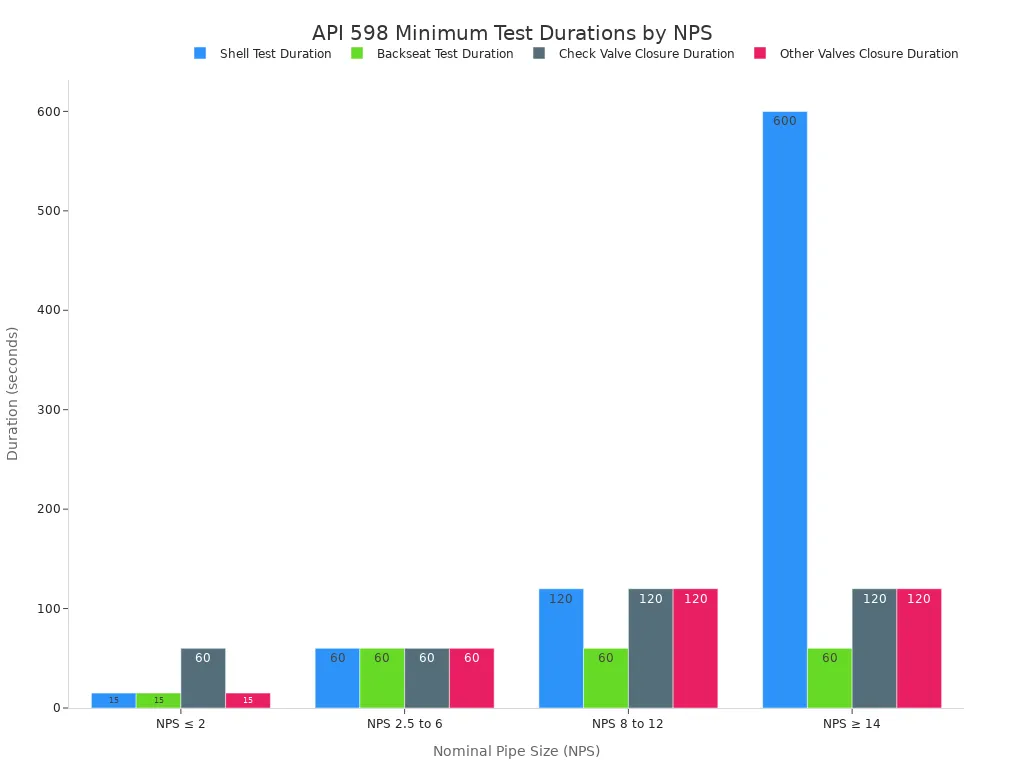
These strict tests stop dangerous field leaks.
Material Traceability and MTR Verification
Checking raw metals stops factory mix-ups. Shops store many metal types nearby. Unchecked parts can mix easily.
PMI tests give key safety help:
-
PMI checks key metals like nickel.
-
Chemical tests beat color tags or paint codes.
-
Real tests confirm physical metal stamps.
-
Testing gives written metal proof first.
Demand full Material Test Reports (MTR). Good metals stop fast pipe rust.
Fugitive Emissions and Seat Leakage Controls
Chemical leaks cause major plant damage. ISO 15848-1 and API 624 stop leaks.
|
Standard |
Scope |
Focus of Measurement |
|---|---|---|
|
ISO 15848-1 |
Broad scope covering isolation/shut-off and control valves used for volatile air pollutants and hazardous fluids. |
Evaluates the entire valve package, including external leakage at stem seals and body joints. |
|
API 624 |
Narrow scope specifically tailored for valves using graphite packing (rated over 500°F). |
Evaluates the performance of the valve's stuffing box/stem interface (using API 622 qualified packing sets). |
Tight seals trap dangerous liquids inside. Pick certified makers to stay safe.
Pick a good maker carefully. Check metal types. Test pressure limits. Look for real certificates.
API 594 rules help you. API 6D tags keep pipes safe. TANGGONG VALVE makes many parts. They test every piece. They ship goods around the world.
Smart picks save money. They stop bad leaks. Talk with our team. Read our book today. Pick a great valve maker now.
FAQ
How do you pick the right steel grade?
Check liquid types first. Know process details. 316 steel stays safe. Duplex alloys fight harsh rust. They handle extreme heat. Match metal traits to job needs.
Why pick dual plate check valves?
They shut fast. Fluid cannot move backward. Built-in springs stop pipe hammer. High-pressure lines stay safe. Liquids move smoothly. Upstream tools stay safe.
Which rules ensure top valve performance?
Look for API 594 rules. Check API 6D standards. They set wall thickness. They fix exact sizes. They mandate pressure testing. Certified valves stay safe worldwide.
Do stainless steel valves handle freezing jobs?
Yes. Special steel check valves work. CF8M alloys stay strong. They handle deep cold. Temperatures drop to -196°C. They keep systems very safe.