



You need dependable tools to control liquid flow in factory pipe networks. A ball check valve works as an automatic non-return valve. It opens and closes using pressure differences without needing human control. This smart check valve plays an important role in backflow prevention. It protects your pumps from sudden shock loads and prevents damaging water hammer. Better technology and growing infrastructure spending in chemical processing boost global market demand for these products. TANGGONG VALVE brings over 36 years of industrial valve engineering experience to your work. You can trust our strong manufacturing background to protect your key liquid systems every day.
Key Takeaways
-
Ball check valves stop reverse flow on their own without needing any human help.
-
The turning ball wipes itself clean and keeps the seats safe from messy fluids.
-
Spring-loaded options prevent water hammer damage before fluid flows backward.
-
Two-ball styles give added safety for important factory pipes.
-
Picking the right valve size and pressure strength stops major energy loss.
-
TANGGONG VALVE offers dependable approved check valves for demanding uses.
Ball Check Valve Working Principles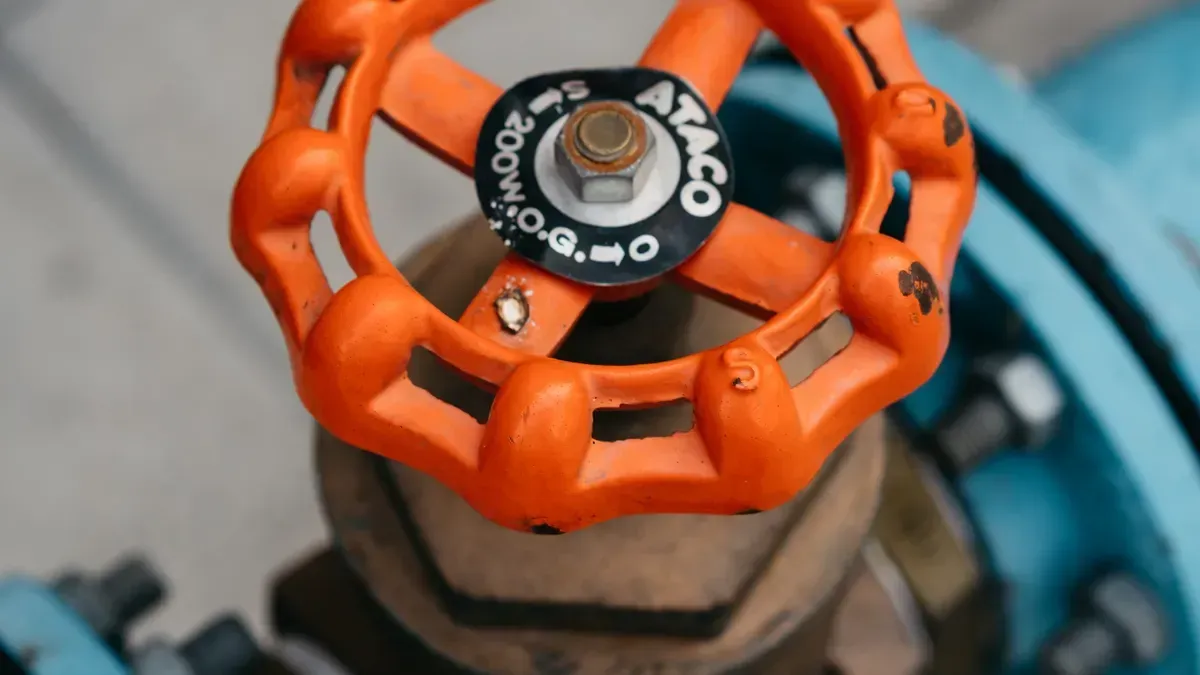
Ball Check Valve Anatomy
Valve Body and Seats
You need a strong valve body to safely hold inside pressure during daily work. This thick outer shell shields inner working parts from outside stresses and pipe strain. The body keeps internal sealing seats lined up where they belong. Soft seats use flexible rubber like NBR or EPDM to block leaks at lower temperatures. Hard metal seats handle hotter spaces and rough, dirty liquids. In high-pressure systems over 1500 PSI, seat leaks cause 60-70% of valve failures. Extreme pressure swings can bend or crush seat materials over time. Picking matching seat materials for your fluid keeps critical pipelines working safely.
Spherical Obturator Function
The round ball serves as the main moving part inside the valve body. This simple sphere directs fluid and blocks backflow automatically without any outside power. You can pick a solid metal ball for tough jobs or a rubber-coated ball to reduce noise. Its round shape cleans itself continuously as liquid moves past. Moving fluid forces the ball to spin constantly while flowing around it. This spinning action stops uneven wear and helps seats last much longer. A ball check valve relies on this shape to give reliable results without human help.
Operational Sequence
Cracking Pressure and Forward Flow
Forward fluid movement starts when upstream line pressure reaches the needed cracking pressure. A spring-loaded lift check valve usually needs 0.5 to 25 psi to open up. Incoming pressure pushes against the round ball surface to lift it away from the seat. Liquid flows smoothly past the ball once upstream pressure overcomes the spring force. This movement creates a steady one way flow through the open valve chamber. You can maintain steady flow without using electric parts, powered actuators, or manual handles.
Reverse Flow and Backpressure Sealing
Reversing fluid instantly changes the pressure balance inside the main valve chamber. Dropping inlet pressure and rising outlet pressure push the ball back toward the seat fast. Gravity or an inside spring speeds up this movement to stop backward fluid motion. Increasing backpressure jams the ball tightly against the soft or metal seat for a leak-free seal. Standard factory test rules check this sealing strength under strict safety guidelines:
-
API 598: Runs high-pressure closure tests at 1.1 times the cold working pressure. A DN 50 metal-seated check valve allows gas leaks up to 0.08 m³/h.
-
ISO 5208: Sets leak rules like Rate AA, which caps liquid loss at 0.006×DN mm³/s.
Flow Dynamics and Efficiency
Full Port vs Reduced Port Design
Inner valve opening sizes directly change how much liquid flows through your pipe system. Full port choices match the full inside diameter of your connected piping. A 4" full bore valve reaches a flow coefficient range of 450 to 520. A 3" full bore valve gives a flow coefficient range of 240 to 280. Reduced port designs narrow the path to smaller internal flow areas. A 4" reduced bore valve with a 3" port delivers a flow coefficient range of 180 to 220. Pick the right port size to balance system flow with valve space needs.
Flow Resistance and Pressure Loss
Fluid friction inside the valve chamber causes power loss during steady liquid flow. You can figure out system pressure drop using the flow rate formula ΔP = (Q/Cv)². A wide-open ball valve keeps a base valve loss coefficient range of 0.05 to 0.15. Smaller bore valves add extra fluid resistance because of changing interior shapes:
-
Fast narrowing from 4" to 3" creates a contraction loss coefficient range of 0.25 to 0.40.
-
Fast widening from 3" to 4" creates an expansion loss coefficient range of 0.35 to 0.50.
Adding these loss values together shows total fluid resistance for smart planning in your pump discharge network.
Structural Types and Configurations
Free-Floating vs Spring-Loaded Valves
Gravity-Assisted Designs
You can choose gravity-assisted designs for vertical pipe systems with upward flow. These simple systems place a loose ball inside the valve body without internal springs. Forward liquid pressure easily pushes the ball upward to let fluid pass.
Gravity pulls the ball back down onto the seat when the pump stops. You must install these units vertically so gravity works correctly. Viscous fluids and heavy slurries work well with this open design.
Spring-Assisted Non-Slam Designs
Spring-assisted models add an internal spring behind the floating sphere. The spring pushes the ball toward the seat as forward flow drops. This mechanism helps close the valve before reverse fluid flow can build up speed.
Silent or spring-assisted check valves do not rely on gravity or reverse flow to close. Instead, the spring closes the valve in about one-tenth of a second, before reverse flow has an opportunity to slam the valve shut.
|
Valve Type |
Trigger for Closure |
Slam Characteristic |
|---|---|---|
|
Swing Check Valve |
Relies on reversal of fluid flow to push the disc shut. |
Often experiences slamming as flow ceases or reverses abruptly. |
|
Spring Check Valve |
Engineered to close before flow reversal occurs, using spring force. |
Reduces or eliminates slamming by preempting reverse flow. |
|
Non-Slam Design |
Spring counteracts flow pressure; closes as flow diminishes. |
Closes gradually before any reverse flow happens, preventing slam. |
Single-Ball vs Double-Ball Configurations
Single-Ball Non-Return Valves
A single-ball check valve uses one spherical obturator inside the main fluid path. You get a compact body that requires minimal installation space in tight piping layouts. This economical setup handles standard backflow protection in everyday water systems.
The single internal ball moves smoothly during routine operations. You experience minimal pressure drop across short valve chambers. Maintenance teams quickly service these straightforward units during regular line inspections.
Double-Ball Redundant Valves
Double-ball configurations place two spherical sealing elements in series within one body. You gain double backflow protection for critical industrial pipelines. The second ball seals instantly if debris blocks the first seating surface.
Toxic chemical plants and high-pressure supply lines benefit from this redundant safety design. You prevent dangerous spills and backflow contamination in sensitive systems. The dual-chamber body ensures complete shutoff during severe operating conditions.
Body Styles and End Connections
Flanged, Wafer, and Threaded Ends
Flanged end connections bolt directly to matching pipe flanges for secure mounting. You easily install larger flanged units in high-flow municipal networks. Threaded ends screw directly onto smaller pipes for quick installation in compact skid systems.
Wafer body styles fit tightly between two line flanges using long stud bolts. You save valuable space and reduce total piping weight with wafer valves. Plant engineers prefer wafer designs for space-constrained installations.
Socket Weld and Butt Weld Connections
Socket weld ends accept pipe tips directly into machined valve sockets before welding. You form strong, leak-free joints on small high-pressure lines using socket welds. This joint style prevents liquid leaks around critical connection points.
Butt weld connections align directly edge-to-edge with matching process piping. You weld these heavy-duty ends into high-temperature pipelines for permanent service. Welded joints withstand high internal pressures and severe pipe stresses without leaking.
Material Selection and Construction
Metallic Body and Internal Alloys
Stainless Steel CF8, CF8M, and Duplex SS
You select stainless steel alloys to handle tough chemicals and high heat. Standard cast grades CF8 and CF8M protect inner valve parts from rust and dirty fluids. According to ASTM specifications:
The material ASTM A351 CF8M (316 SS) has a specified maximum temperature limit of 538°C (1000°F).
Duplex stainless steel alloys offer extra mechanical strength and chemical protection compared to basic stainless steels. Grades like F50 and F51 use a special dual-phase blend with 20–28% chromium and up to 5% molybdenum. This mix stops salt damage and stress cracks inside ocean pipes. Offshore rigs choose 22Cr duplex because it fights rust well. Its strong build lets makers use thinner valve walls, which cuts down unit weight without sacrificing strength.
Carbon Steel WCB and Low-Temp LCB/LCC
You pick carbon steel bodies for high-pressure, clean factory lines. Cast WCB carbon steel runs daily oil, water, and steam systems in general utility plants. Carbon steel needs outer paint coatings because salty air rusts bare metal fast.
Cold-weather grades like LCB and LCC guard your pipes during deep freeze events. These tough metals prevent sudden cracking in cold conditions. You keep your valve running safely all through freezing winter weather.
Seat and Seal Options
Soft Seals (PTFE, NBR, EPDM, Viton)
Soft rubber seats form tight, leak-free seals in low-pressure setups. Flexible materials like NBR and EPDM seal dirty liquids well. Strong acids need smart seal choices to stop swelling and early leaks.
|
Property |
TIANYU PTFE (Unfilled) |
Viton (FKM) |
|---|---|---|
|
Chemical Resistance |
Excellent (99% of chemicals) |
Good (resistant to oils/solvents, not resistant to strong oxidizing acids) |
|
Service Life (Typical) |
3-5 years |
1-2 years |
Plain PTFE offers great chemical defense and smooth, low-friction movement. Standard Viton-A can expand and weaken inside harsh acid lines.
Metal-to-Metal Hard-Faced Seats
Metal seats deal with hot fluids and rough industrial sludges. Workers weld tough Stellite metal onto smooth sealing surfaces. Hardened metal seats resist scraping from fast-moving dirt, protecting areas where soft rubber seals wear out fast.
High-Performance Spring Materials
Inconel X-750 and Hastelloy C276
Internal springs need super nickel alloys to stay strong under extreme heat and pressure. Inconel X-750 holds its spring action inside hot process pipes. The spring pushes the ball shut before liquid flips direction.
Hastelloy C276 spring metal fights off harsh damage from acids and strong chemicals. These top-grade alloys stop metal fatigue and sudden spring breakage. You get longer part life during heavy daily factory work.
Ball Check Valve Comparison Guide
Ball Check Valve vs Standard Ball Valve
Automatic Operation vs Manual Actuation
Normal ball valves need hand levers or motor drives to stop liquid movement. You must turn the handle or send a power signal to spin the middle ball. These quarter-turn valves give you direct manual control over pipe flow.
A ball check valve works automatically without human help or extra power. Differences in fluid pressure push the inside ball away from its seat during forward movement. The valve automatically closes against backward pressure when forward flow drops.
Internal Geometry Differences
A normal ball valve uses a solid round ball with a straight hole through its center. Liquid moves smoothly through this open path when you turn the valve fully open. Turning the solid side across the pipe path blocks all liquid completely.
A check valve uses inner guide rails or a spring track to guide ball movement. The solid round ball lifts away from its seat during forward flow without turning on a fixed rod.
Ball Check Valve vs Swing Check Valve
Performance in Viscous and Slurry Media
Mining pipes and sewage networks carry thick mud filled with floating dirt. A ball check valve stops clogs because moving liquid turns the ball inside the valve body. This constant spinning action wipes off dirt and keeps the seat clean automatically.
Swing check valves use a swinging disc that hangs on a top pivot pin. Heavy mud and thick fluids can catch dirt around the pivot pin. Sticky liquids often jam the disc arm and cause unexpected backward leaks.
|
Performance Aspect |
Ball Check Valves |
Swing Check Valves |
|---|---|---|
|
Closure Element |
Spherical ball |
Hinged disc |
|
Clogging Resistance |
High resistance to debris |
Potential issues with dirt |
|
Best Orientation |
Vertical upward or flexible |
Horizontal piping systems |
Footprint and Installation Flexibility
Gravity-based ball valves need vertical pipes with upward flow to shut tightly. You can also add inner springs to fit these compact valves into any pipe angle.
A swing check valve operates best inside flat, horizontal pipe layouts. The wide hinged disc needs extra space inside the valve body to swing open fully. Its larger valve shape uses up limited room in tight factory layouts. Each valve style shields your attached pumps within your available space.
Ball Check Valve vs Poppet Check Valve
Sealing Speed and Response Time
A poppet check valve relies on a flat disc or guided plug on a middle shaft. The guided poppet slides along a straight line to close the opening fast. This rapid action helps block reverse flow shocks in tiny chemical lines.
A piston check valve also responds fast by sliding a solid plug through an inner guide track. The round ball inside a ball unit provides similar quick closing speeds. Spring forces push the smooth ball onto the seat before liquid turns around.
Maintenance and Wear Factors
Poppet valves use center guide shafts that can wear out over time. Moving liquid and gritty dirt rub away these thin shafts during daily work. Ruined shafts can jam the valve plug and cause expensive flow stops.
Round ball setups drop fixed guide shafts entirely from the design. The smooth ball spins freely to spread out surface wear evenly during daily use. You save repair time and lower maintenance costs in tough liquid lines.
Key Industrial Applications
Wastewater and Slurry Management
Handling Suspended Solids and Sludge
You need dependable tools when moving heavy waste streams. Sewage networks carry sticky sludge that easily clogs piping parts. A ball check valve solves this issue with its basic inner setup. Moving liquid spins the round ball constantly to stop dirt buildup.
Ball check valves work well in small sewage stations because the ball handles solids easily. Their simple interior design stops clogging in compact waste systems.
|
Mechanism |
Description |
Impact |
|---|---|---|
|
Self-Cleaning Action |
Fluid pressure spins the round ball. |
Stops solid buildup effectively. |
|
Simple Internal Design |
The valve lacks complex moving parts. |
Removes places where dirt catches. |
Sump Pump Protection
Sump pumps clear dirty water through city drains and deep basements. You must shield these pumps from backflow when motor power cuts off. Returning wastewater spins pump impellers backward and damages inner seals.
The round sphere drops onto its seat as forward pressure stops. Gravity or backpressure seals the valve fast to hold the water column. This fast shutoff stops dirty water from flowing back into your pump pit.
Chemical and Petrochemical Processing
Dosing System Isolation
Chemical metering lines need exact liquid control to mix harsh fluids safely. You count on steady flow rates without backflow disturbing your delicate pumps. Small-bore units give instant sealing across active chemical lines.
The inner sphere reacts fast to pressure shifts during pump strokes. Backflow cannot leak into supply tanks or change liquid mixtures. Your plant keeps chemical treatments precise while protecting upstream pump tools.
Corrosive Fluid Handling
Sour gas units process toxic hydrogen sulfide gas under hard conditions. You choose NACE MR0175 compliant metals to prevent sudden stress cracks. Standard AISI 440C SS balls are NOT allowed in sour service because hard metal cracks easily. Instead, you pick annealed Type 316 stainless steel or Stellite surfaces.
|
Component |
NACE MR0175 Condition |
Function in Valve |
|---|---|---|
|
ASTM A216 WCB Body |
Maximum hardness 22 HRC |
Holds pressure shell |
|
Type 316 SS Ball |
Annealed without cold working |
Stops sour rust |
Power Generation and Energy Systems
High-Pressure Feedwater Lines
High-pressure boiler pumps feed water networks inside steam power plants. Power stations push hot liquid through thick steel piping circuits. You need strong check valves to stop backflow during sudden plant trips.
Tough steel bodies handle intense heat shifts and sudden pressure spikes. Metal-to-metal seating areas resist heat strain over long working cycles. You protect costly feed pumps against dangerous flow reversals.
Condensate Return Protection
Steam condensate return lines bring warm recycled water back to tanks. Flashing steam creates quick pressure shocks and water hammer in condensate pipes. You install small valve units to absorb liquid shocks across your recovery network.
These valves close off parallel condensate lines automatically during shifting plant loads. Clean condensate moves forward smoothly to boiler tanks without dirty backflow. Safe water recovery improves plant output in drinking water systems.
Selecting the Right TANGGONG VALVE Check Valve
Sizing and Pressure Class Ratings
Matching DN15 to DN1200 Sizes
You must pair your pipe size with the right internal valve dimensions. TANGGONG VALVE makes check valve units from DN15 up to DN1200 sizes. Small DN15 valves manage low fluid flow in exact chemical lines. Big DN1200 valves handle huge fluid volumes in industrial water systems.
You prevent heavy pressure loss by picking correct valve sizes. Proper sizing keeps fluid speed steady inside the valve body. TANGGONG VALVE uses a 175,000 square meter plant area for precise sizes. Our modern factory builds over 300,000 units yearly for global industrial projects.
Pressure Classes from Class 150 to Class 2500
You need matching pressure ratings to keep systems safe under heavy loads. TANGGONG VALVE offers valve body ratings from Class 150 to Class 2500. These ratings cover metric pressure classes from PN10 up to PN420 easily.
Your fluid heat level determines the right pressure class for your needs. Our custom valve alloys run safely from -196°C up to 600°C spaces. Higher heat lowers the max allowed pressure for standard metal bodies. You protect system safety by choosing metals that fit your exact heat settings.
Installation Orientation Guidelines
Vertical Upward vs Horizontal Pipelines
You must check fluid direction when placing non-return valves in your line. Free-floating models work best inside vertical pipes with upward flow. Upward moving liquid pushes the floating sphere upward during daily work.
The internal ball offers compact flexibility across diverse installation angles.
|
Installation Condition |
Recommended Valve Type |
Key Performance & Flexibility Insight |
|---|---|---|
|
Tight or confined spaces |
Ball check valve |
Its compact design offers flexibility for installation in either horizontal or vertical orientations. |
|
Vertical installations (especially upward flow) |
Ball check valve |
It offers more flexibility compared to other valve types in this orientation. |
|
Primarily horizontal piping |
Swing check valve |
Ensures more stable closing performance in this specific orientation. |
Preventing Debris Accumulation
You guard your sealing seats by placing the valve body correctly. Flat horizontal pipes let heavy dirt gather near the lower seat space. Solid bits cause unwanted leaks between the round ball and seal.
Vertical upward lines use fluid speed to sweep floating particles away. Fast moving liquid flushes dirt through the valve body smoothly. This smart path cleans internal parts during daily liquid control work.
Quality Standards and Maintenance
API 594, API 6D, and CE Compliance
You get full safety peace of mind through tested factory guidelines. TANGGONG VALVE builds every check valve under strict ISO 9001:2015 rules. Our plant design teams follow API 594 and API 6D global standards.
Outside inspectors approve our products with CE, TUV, and SGS official marks. These key credentials prove our industrial valves handle high working loads. You protect your plant tools by fitting fully certified pipe parts.
Routine Inspection Procedures
You extend valve working life through simple preventive care steps. Repair teams check the inner ball and rubber seat areas during regular shutdowns. You clean trapped dirt from the valve body using basic flushing steps.
You replace worn soft seats quickly to keep a tight leak-free seal. Damaged springs need fast replacement to stop valve slam during flow shifts. Regular care steps lower long-term upkeep costs across your entire processing plant.
A ball check valve stops dirty liquids and thick mud from flowing backward on its own. Its spinning round ball sweeps the inner seals clean while fluid moves every day. You need to pick the right metal body, the correct pipe size from small to large, and the best standing or flat position. These key choices shield your equipment from sudden pressure hits and expensive damage.
TANGGONG VALVE delivers dependable liquid control backed by 36 years of industrial valve experience. You can check out our full range of valves online to find approved gear for your pipe networks. Talk with our skilled engineering team today to get custom valves built for your special setup.
FAQ
How does a ball check valve prevent backflow?
Pushing liquid moves the round ball away from its seat as fluid flows ahead. When this movement stops or turns around, gravity, backward force, or an inner spring slams the ball home. This rapid response seals the opening right away, blocking backflow without outside energy.
Can you install a ball check valve vertically?
Yes, you may set free-floating ball check valves inside vertical pipes with upward liquid flow. Spring-assisted types also work fine in both upright and flat pipe setups. The inner spring aids fast valve shutoff no matter how the pipe turns.
What makes ball check valves suitable for slurry and wastewater?
Passing fluid forces the round ball to spin around constantly within the main housing. This steady rotation scrubs the seating areas clean on its own. It stops trapped dirt, thick mud, and floating gunk from jamming internal parts while running every day.
What temperature and pressure ratings do TANGGONG check valves support?
TANGGONG check valves handle pressure limits stretching from Class 150 up to Class 2500 (PN10 through PN420). Our specialized metal choices work safely across hot or cold settings from -196°C to 600°C, based on the body and seat options you pick.
What standard certifications do TANGGONG check valves hold?
TANGGONG builds every check valve using ISO 9001:2015 quality guidelines alongside API 594 and API 6D blueprints. Independent testing agencies approve our valve lineup with CE, TUV, and SGS seals to guarantee trusted performance for heavy industry.
What is the main difference between a ball check valve and a swing check valve?
A ball check valve relies on a spinning round ball that scrubs itself clean in murky liquids. A swing check valve uses a swinging flap that works best inside flat pipes. Ball check valves fit much easier into cramped piping spaces.