



Three key standards control industrial api check valve making. They are api 594, API 6D, and 602. These rules set wall thickness and pressure ratings. They also define temperature limits and reverse flow prevention. Oil and gas engineers require these for tough jobs. Plant workers use strong designs to stop backflow risks. This protects important equipment. Also, these standards set seat leakage limits for safety. Big factories use certified designs for long-term safety.
Key Takeaways
-
API standards give clear safety rules.
-
They cover valve thickness and pressure ratings.
-
They also stop reverse flow.
-
Spring-loaded check valves close fast.
-
This stops water hammer.
-
It protects system pipes from damage.
-
Strong steel alloys protect inner valve seats.
-
Hard coatings protect them too.
-
They stop damage from high heat.
-
They also stop fluid wear.
-
API requires strict pressure checks.
-
They also require fire-safe tests.
-
These guarantee reliable performance.
-
They help in high-risk plant jobs.
API Check Valve Design Standards

Engineers pick valve types for each job. API standards guide their choices. These rules set wall thickness. They show strength limits. They define pressure rules too.
API 594 Wafer and Dual-Plate Valves
The api 594 rule details small valve rules. Designers pick api 594 for light setups. It fits tight spaces. Spring plates shut fast. This stops bad water hammer.
TANGGONG VALVE follows simple rules for api 594:
-
Body Wall Thickness Standards: Simple charts show thick walls. They fit iron valve bodies. Steel choices use ASME B16.34 rules.
-
Face-to-Face Dimensions: Type A follows api 594 charts. Type B uses ASME B16.10 rules.
-
Body-to-Bonnet Connections: Class 150 allows flat joints. Raised faces work fine too.
-
Internal Component Criteria: Plate nuts must lock tight. Seat overlays need thick welds.
-
Dimensional Tolerances: Sizes up to NPS 24 follow ASME. Big valves use ±3 mm.
-
Flange Alignment: Groove setups match ASME B16.5 rules. ASME B16.47 works too.
API 6D Pipeline Check Valves
Big pipelines need strong valves. API 6D guides swing valves. They keep flow moving well. Full openings allow cleaning tools through. Inspection tools pass easily too.
|
Requirement Category |
Design Specification / Condition |
|---|---|
|
Bore Dimension |
Open valves give 100% full space. |
|
Internal Tolerance |
Tight spaces help tools move. |
|
Hinge Alignment |
Hinges stay out of the way. |
|
Spring Assist Pressure |
Springs do not block tool paths. |
|
Surface Finish |
Smooth paths fit all tool types. |
API 6D adds more swing valve rules:
-
Flow Path Clearance: The disc moves out of the path.
-
Locking Restrictions: Locks keep parts safely open.
-
Pre-Pigging Verification: Teams test tools before starting flow.
TANGGONG VALVE builds tough API 6D valves. They block bad backflow events.
API 602 Small-Bore Forged Valves
High-pressure lines use forged steel. API 602 gives small valve rules. Plant systems need these strong setups.
|
Parameter / Category |
Details Specified in API 602 |
|---|---|
|
Size Range |
NPS ½ to NPS 4 sizes. |
|
Pressure Classes |
Class 800 to Class 4500. |
|
Class 800 MAWP (at 38°C / A105N) |
138 bar top limit. |
|
Class 1500 MAWP (at 38°C / A105N) |
260 bar top limit. |
|
Class 2500 MAWP (at 38°C / A105N) |
430 bar top limit. |
|
Class 4500 MAWP (at 38°C / A105N) |
770 bar top limit. |
|
Carbon Steel Temp Limit (A105N) |
–29°C to 425°C range. |
|
Austenitic Stainless Temp Limit (F316/F316L) |
–196°C to 538°C range. |
|
Low-Alloy Steel Temp Limit (F11) |
–29°C to 593°C range. |
|
Alloy Steel Temp Limit (F22) |
–29°C to 649°C range. |
|
Duplex Stainless Temp Limit (F51/F53) |
–46°C to 316°C range. |
This chart shows top pressure limits for steel bodies:
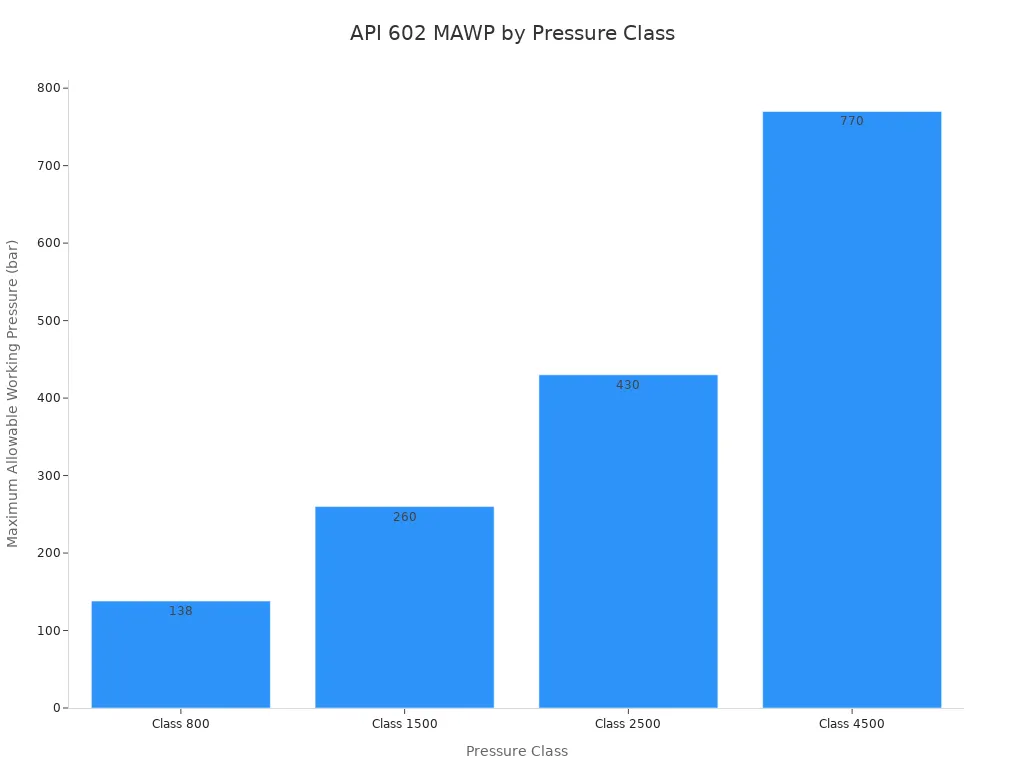
ASME B16.34 Pressure Envelopes
ASME B16.34 sets body strength rules. It gives thin wall limits. Heat charts match pressure goals. Metals stay safe under stress.
Good choices match heat with pressure. Hard jobs need these set limits. TANGGONG VALVE makes certified api-compliant valves. They keep system setups safe. They last a long time.
Technical Specs and Pressure Ratings
Engineers check design specs before picking industrial check valve types. Correct ratings keep systems safe during tough work.
Wall Thickness and Shell Integrity
ASME B16.34 rules give shell wall limits. These needs stop body bending from high pressure. Makers use alloy stress math to set limits.
Integrity Note: Calculated Wall Thickness Corrosion Allowance = Minimum Required Thickness
Thick bodies take heavy pipe loads easily. Strong walls stop fluid leaks and keep pressure in.
Pressure Classes 150 to 2500
Heat and pressure rules set exact safety limits. Rating groups range from Class 150 to 2500. Low classes work for utility water lines. High classes handle heavy oil and high-pressure steam.
|
Pressure Class |
Max Working Pressure at 38°C (Bar) |
Typical Industrial Application |
|---|---|---|
|
Class 150 |
~19.6 |
General chemical transfer, utility lines |
|
Class 300 |
~51.1 |
Process refinery units, high-temp steam |
|
Class 600 |
~102.1 |
Gas compression plants, boiler feed |
|
Class 1500 |
~255.3 |
High-pressure hydrocarbon extraction |
|
Class 2500 |
~425.5 |
Ultra-high pressure offshore production |
Hotter fluids lower total safe pressure levels. Plant workers check ASME stress charts before changing work.
Face-to-Face Dimension Compliance
Matching sizes helps workers swap valves during repairs easily. ASME B16.10 and api rules set full body lengths.
-
Flanged Bodies: Regular lengths fit right between pipe ends.
-
Wafer and Dual-Plate: Small shapes save space on oil rigs.
-
Butt-Weld Ends: Weld edges follow ASME B16.25 rules for field work.
Exact sizing speeds up pipe work and saves money.
Structural Valve Types and Features
Engineers test check valve choices for big jobs. Old plate designs have hinge pins in holes. These drilled holes go through outer walls. They make pathways for bad leaks. Retainerless dual-plate models hide pins inside. This api 594 setup removes outer body holes.
-
Zero External Leakage: One-piece bodies block all gas leak paths.
-
Enhanced Safety: No pin holes helps keep fire safety per API 6FA.
Dual-Plate Retainerless Designs
Retainerless builds fit inside small pipe spaces. Inner holders lock parts inside safely. This design keeps fluids trapped during heat changes.
Full-Opening Swing Check Valves
Pipeline teams pick swing valves for open flow. Good choices cut pressure loss in big pipes.
|
Advantage |
Operational Impact |
|---|---|
|
Decreased Pressure Drop |
Cuts energy needs for moving fluid. |
|
Cavitation Prevention |
Keeps flow steady to stop vapor bubbles. |
|
Enhanced System Efficiency |
Improves work during high fluid flow. |
Regular swing valves act in set ways:
-
Disc Opening Angle: Discs open to 60°–85° and cause small bumps.
-
Resistance Coefficient: Normal swing valves show K values from 1.0 to 2.5.
-
High-Velocity Impacts: Flow over 4 m/s makes discs shake badly.
Teams put swing valves in long pipe lines.
Piston and Lift Check Valves
Piston check units work well in strong systems. The guided piston moves up and down. Fluid force lifts the piston to open lines. Weight or backflow drops it onto seats.
Tilting Disc Non-Slam Designs
Tilting disc units use a side pin. Discs shut fast before reverse flow starts. This design meets api 594 rules for special jobs. Plants use these swing check valves for pump safety. Users trust these swing check valves for safe pipes. Teams choose swing check valves to stop backflow.
Materials and NACE Compliance
Hard plant jobs need strong metals.
Bodies handle high pressure.
They resist bad chemicals.
They stand big heat shifts.
They avoid structural breaking.
Carbon, Alloy, and Stainless Steels
Metals give good strength.
They have heat limits.
Carbon steel fits clean flow.
Harsh jobs need stainless steel.
Special alloys work well too.
Engineers pick fit metals.
These choices suit plant fluids.
|
Material |
Low Temperature Limit |
Temperature Capabilities |
Corrosion & Service Limitations |
|---|---|---|---|
|
ASTM A216 WCB |
-29°C (-20°F) |
Special alloys handle heat. |
It fits clean water. It handles oil and gas. Acids harm this metal. |
|
ASTM A352 LCC |
-46°C (-51°F) |
It handles cold areas. It stays very tough. |
It handles mild salt. It fits cold liquid lines. |
|
ASTM A351 CF8M |
-196°C (-320°F) |
Cold spaces leave it tough. High heat stays safe. |
Strong acids cannot harm it. Solvents will not wear it. |
|
Duplex Stainless Steel |
-40°C (-40°F) |
High strength stays steady. Heavy tasks do not bend it. |
It stops acid damage. Sand slurries will not scrape it. |
Alloys like A217 WC6 handle hot steam.
Duplex options resist deep pitting.
Offshore rigs stay safe from corrosion.

Trim Materials and Stellite Hardfacing
Inner parts feel continuous liquid flow.
Fast fluids wear soft metals fast.
Makers add hard trim parts.
This builds longer valve life.
Key Reliability Tip: Adding Cobalt Stellite stops seat wear. It prevents bad leaks under fast flow.
-
13 Chrome (13Cr) Trim: Steel trim stops mild wear. Steam erosion stays low.
-
Stellite No. 6 Overlay: Hard welds cover seat rings. Hardness stays past 500°C.
-
Hardened Seat Protection: Lower metal resists friction. High pressure will not hurt it.
Hard seats block scratch damage.
Dirt passes without leaving marks.
Sour Service and NACE MR0175
H2S gas brings bad dangers.
Wet gas cracks hard metals.
Oil plants follow NACE rules.
The MR0175 standard keeps operations safe.
-
Hardness Control: Metal hardness stops at 22 HRC max. Soft structures resist cracking.
-
Microstructure Testing: Foundries apply heat stress relief. Every main part gets tested.
-
Fugitive Emissions Sealing: Gas lines match ISO 15848-1 rules. Low leak classes keep systems safe.
Engineers must pick certified metals.
This stops total system failure.
TANGGONG VALVE supplies sturdy units.
They serve oil markets globally.
True compliance keeps work safe.
Plants last a long time.
Essential API Testing Protocols
Strict safety checks test body strength. They also check tight seals. Rules need liquid and air pressure tests. Workers test parts before shipping them out.
API 598 Pressure and Leakage Testing
The API 598 rule guides pressure tests. Technicians run liquid tests inside factory rooms.
|
Parameter Category |
API 598 Standard Requirement |
|---|---|
|
Hydrostatic Pressure Level |
Set pressure to 1.5 times MOP. |
|
Minimum Test Duration |
Test for at least two minutes. |
|
Fluid Medium |
Use water or clean liquid. |
|
Operating Temperature |
Keep room temperature near 20°C. |
Soft PTFE seats must block all leaks. Metal seats allow very small drips.
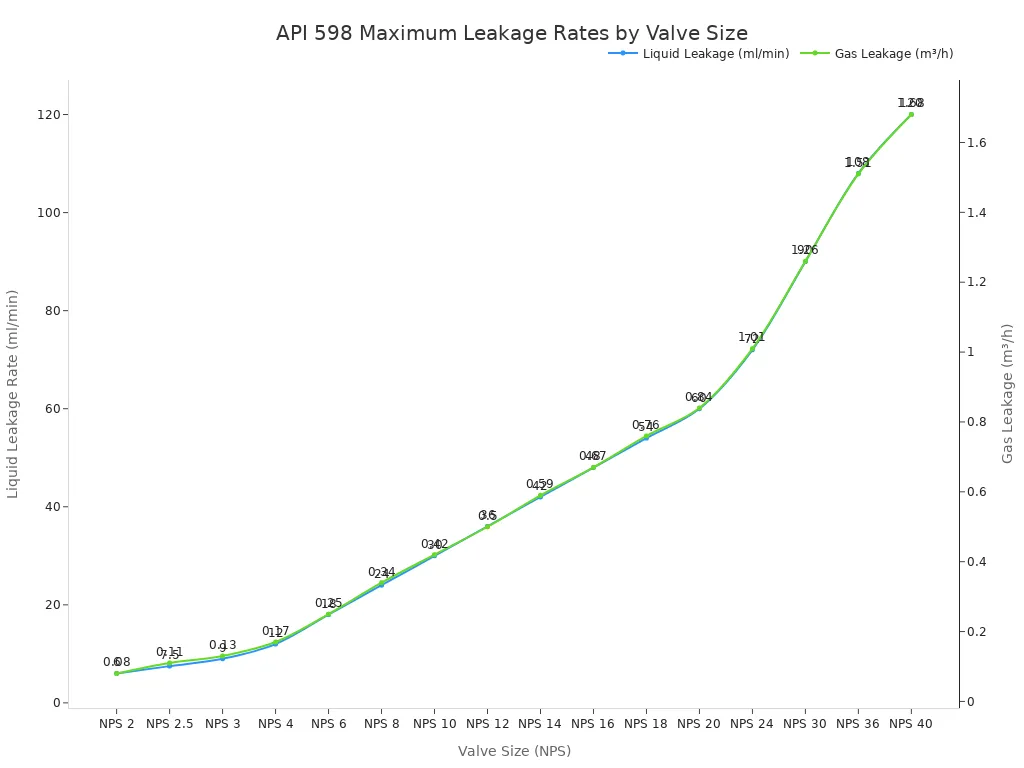
Inspectors count tiny drops during seat tests:
-
Liquid Test Conversion: Sixteen drops equal one milliliter. Zero drops mean no leaks.
-
Gas Test Conversion: One milliliter equals one hundred bubbles.
Fire-Safe Certifications
Hot fires burn soft rubber seats fast. Safe api models use metal backup seals. Metal stops big leaks during bad fires. API 607 and API 6FA rules check valves. Heat tests prove valves stop leaks well. These checks keep plant workers safe.
Fugitive Emission Sealing
Body joints must trap all gas inside. Factories use smart sensors for gas leaks. Tests match ISO 15848-1 rules. TANGGONG VALVE tests every valve part carefully. Groups like TUV check the plant often. Outside checks help prove safety rules.
Mitigating Water Hammer and Flow Dynamics
Spring-Assisted Dynamic Response
Fast fluid shifts cause damaging pressure spikes in pipes. TANGGONG VALVE adds inner springs to industrial check valve parts. This setup controls closing speeds during sudden backflow.
-
Accelerated Valve Closure: Internal springs shut parts before backflow gains speed.
-
Controlled Speed and Pressure Response: Spring force controls closing to protect pipe pressure.
-
Slam Prevention: Early spring closing stops heavy disc slams.
-
Surge Suppression: Controlled shutoffs stop sudden line pressure spikes.
-
Adjustable performance: Users adjust spring tightness for special flow needs.
Sizing for Minimum Velocity
Engineers check line sizes for full disc lifts. Low line speed makes discs chatter inside. This extra movement speeds up wear on parts. Regular swing check units need strong, steady flow. This stops discs from shaking in the line. Matching sizes keeps parts working without quick breaks. Regular checks keep plants running for long years.
Horizontal vs. Vertical Installation
Line layouts show where to put each valve. Designers place swing check units in horizontal lines. They also fit bottom-to-top vertical lines well. Downward lines need precise inline spring choices. The chosen spring must hold internal part weights. It also holds the static liquid column up. Heavy swing check units work best with clear markers. Good setups stop backflow dangers for upflow pumps. Proper steps protect the entire plant for years.
|
Valve Type |
Upward Flow Orientation |
Downward Flow Orientation |
|---|---|---|
|
Spring-Loaded Valve |
Pumps must push past disc weights and springs. |
Use only with special springs for parts. |
|
Gravity-Assisted / Standard Valve |
Fits bottom-to-top lines so fluids lift discs. |
Never use here since gravity holds discs open. |
Specifying TANGGONG VALVE Solutions
Engineers check clear specs. Safe plants need exact valve picks.
Engineering Specification Checklist
Order lists help check data fast. Designers check fluids first.
|
Specification Parameter |
Engineering Scope / Target Range |
|---|---|
|
Nominal Size |
DN15 to DN1200 (1/2" to 48") |
|
Pressure Class |
Class 150 to Class 2500 (PN10 to PN420) |
|
Differential Pressure |
Application-specific line pressure drop limits |
|
Media Compatibility |
Hydrocarbons, sour gas, steam, and corrosive fluids |
Speed math shows disc lift levels. Smart care stops part wear. Fix checks keep systems running well.
TANGGONG VALVE Range and Scope
TANGGONG VALVE brings 36 years of skill. The firm has 200 valve patents. Techs build custom metal mixes for tough jobs.
Techs tweak every api check valve for heat. Strong parts stop backflow risks down line. New shops meet all global standards.
Documentation and Traceability
Teams enforce strict quality rules for api-compliant valves. Systems track each casting from steel to testing.
|
Certificate Type |
Required Documentation & Details |
Authorized Issuer |
Typical Oil & Gas Application |
|---|---|---|---|
|
EN 10204 Type 3.1 |
Chemical composition, mechanical properties, and matching heat number traceability. |
Manufacturer QC representative |
Baseline requirement for standard piping and general facilities. |
|
EN 10204 Type 3.2 |
Full material test results plus independent validation and witnessed testing. |
Manufacturer and independent Third-Party Inspection agency |
Critical environments including sour service and subsea pipelines. |
-
Pipe lines must track all steel parts.
-
Refineries must keep top paper records.
-
Critical jobs need clear safety papers.
ISO 9001:2015 rules keep plant work right.
API rules keep systems safe.
Valves last long.
Fluids stay inside.
Smart parts stop water hammer.
Good metals protect valves.
Hard trims stop wear.
API 594 compliance brings key benefits:
-
Safe builds stop big system failures.
-
Fire-safe seals save total plant money.
Workers can check line needs now.
Contact TANGGONG VALVE for certified valves.
Get full engineering support today.
FAQ
What primary difference separates API 594 and API 6D specifications?
API 594 sets small wafer and dual-plate rules.
API 6D covers full-opening pipe designs.
Engineers pick API 6D swing check valves.
These choices let cleaning tools pass safely.
API 594 units save room in tight spaces.
How often do technicians perform check valve maintenance?
Plant schedules depend on fluid damage and use.
Techs check inner parts during scheduled plant breaks.
Good care stops reverse flow risks completely.
It protects front pumps from damage.
This work helps valves last much longer.
Can engineers install swing check valves in vertical piping runs?
Engineers put swing check valves in vertical lines.
These pipes must have upward fluid flow.
Upward fluid movement lifts the disc well.
Gravity shuts the disc when flow stops.
Downward flow setups cause bad backflow hazards.
Why do system operators specify spring-assisted check mechanisms?
Spring-loaded parts shut discs before flow turns back.
Fast spring actions stop water hammer spikes.
This quick action prevents bad pipe damage.
It stops harm during sudden system shutdowns.