



Design engineers must check key process rules when picking the best stainless steel check valve. First, match the liquid chemistry, and then check the overall pressure and cracking pressure. Selecting superior valve structures made from high-grade materials like CF8, CF8M, or Duplex stainless steel ensures long-lasting operation. Choosing a reliable stainless steel check valve protects downstream equipment, stops dangerous backflow, prevents contamination from dirty liquids, minimizes pressure drops, and mitigates severe water hammer. Manufactured by TANGGONG VALVE, these high-performance units deliver exceptional flow control in demanding piping systems while fully complying with top API 594 and API 6D standards to keep your plant safe and maximize service life.
Key Takeaways
-
Pick tough stainless steel alloys.
-
Try CF8M or Duplex metals.
-
They stop chemical rust well.
-
Measure your flow rates carefully.
-
This stops noisy valve chatter.
-
It prevents bad pipe damage.
-
Use strong spring-loaded check valves.
-
They stop backward liquid flow.
-
They prevent sudden water hammer.
-
Choose safe API-certified TANGGONG valves.
-
They protect your heavy machinery.
-
They make plants last longer.
Key Parameters for Check Valve Selection in Industrial Piping
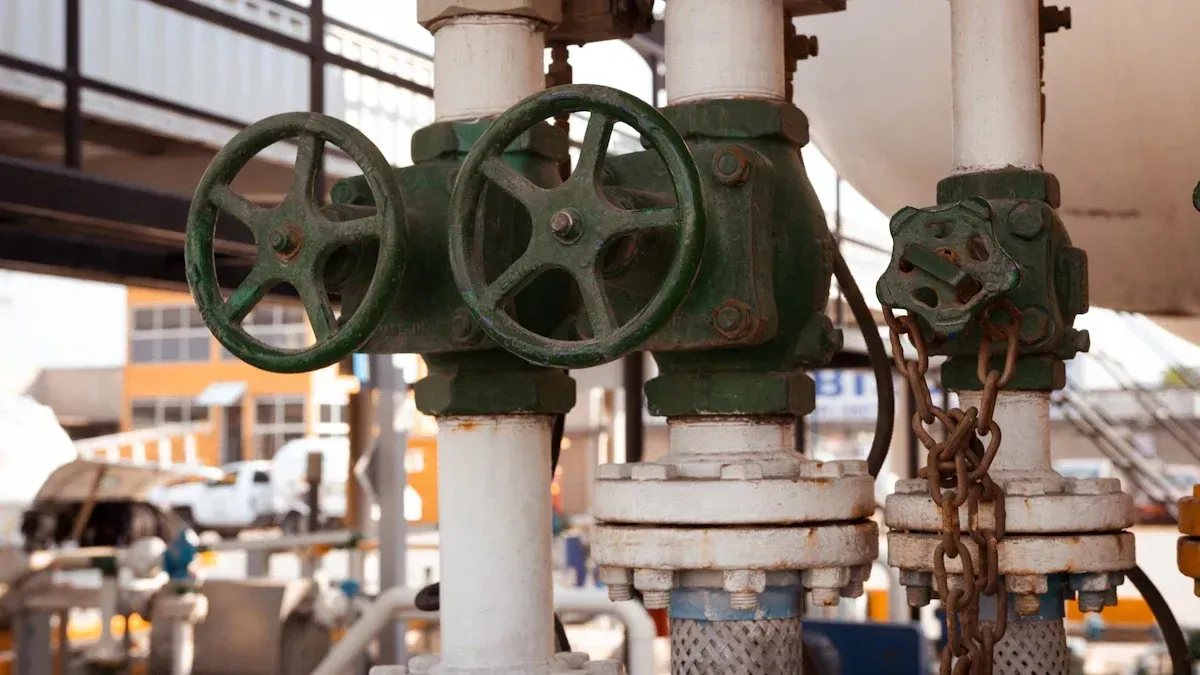
You must study key engineering facts. Do this when picking industrial valves. First, set application needs carefully. Review system flow rates well. Check daily work cycles too. Continuous or off-and-on work changes leaks. It alters valve spot accuracy. Next, check system filter levels. See fluid dirt limits as well. This guarantees long valve life. Use it in tough places. Check load reactions early on. This stops costly gear breaks later.
Fluid Properties and Stainless Steel Material Compatibility
Evaluate fluid fit and chemical mix. Do this to stop early damage. Match fluids to good alloys. This stops quick chemical decay.
|
Corrosion Parameter |
ASTM A351 CF8 |
ASTM A351 CF8M |
|---|---|---|
|
Molybdenum Content |
0% |
2.0% – 3.0% |
|
Chloride Pitting Resistance |
Susceptible to micro-pitting |
Excellent layer protection |
|
Crevice Corrosion Resistance |
Weak in salt media |
Superior in salt/seawater media |
Basic ASTM A351 CF8 fits normal plant lines. It lacks molybdenum metal. So, chloride ions harm its skin. Rust then makes tiny deep holes. Holes bore right through metal. Pick ASTM A351 CF8M for harsh chemical work. It also fits ocean spots with high salt. Added molybdenum helps protect chromium layers. It blocks chloride ion attacks well.
Duplex stainless steel offers strong chemical fit. Use it in harsh liquids like brine. Add temperature checks for chemical lines. Duplex check valves handle heat to 600°F. Regular steel cracks from salt over 140°F. Duplex stays strong above this point. Heat over 572°F causes metal brittleness. So, watch heat limits during valve choice.
Pressure Metrics and Cracking Pressure Ratings
Check four main pressure numbers. This ensures safety in high-pressure setups:
-
Operating Pressure: The real liquid force during normal work.
-
Maximum Pressure: The highest pressure spike from big surges.
-
Proof Pressure: The exact pressure a valve holds safely.
-
Burst Pressure: The top pressure limit causing total breaks.
Cracking pressure starts flow movement. It ranges from 0.5 to 15 psi. Internal spring tension controls this. Strong systems need 5 to 15 psi. High values increase pump work. They raise system backpressure needs too. Low cracking pressure opens valves fast. It works at lower fluid speeds. Yet, weak springs slow valve closing. Reverse flow causes this delay. Internal leaks can hurt accuracy. Fast spring closing stops bad water hammer.
Balance these points with pressure drops. Lift check valves use moving parts. They suit high-pressure steam or gas flow. Test every valve in real conditions. This helps confirm true performance. A poppet check valve handles dirty liquids. Pick the right stainless steel check valve. It controls backflow and protects gear. Use it across tough plant setups.
Stainless Steel Check Valve Types and Structural Designs
Pick the right layout for your pipes. This boosts flow and system safety. Internal parts react to fluid movement.
Swing Check Valve Features and Full-Port Flow
Use a swing check valve in large pipes. It keeps full flow moving well. A swinging disc hangs on a hinge arm. The pin stays out of the fluid path. Forward flow pushes the disc open. Reverse flow shuts the disc tight. It stops all backflow quickly. This open path cuts pressure loss.
|
Valve Type |
Disc Movement & Hinge Location |
Placement Relative to Flow Path |
Structural Footprint |
|---|---|---|---|
|
Swing Check Valve |
Disc turns on a hinge pin. |
Hinge pin stays outside the fluid path. |
Full body lets the disc swing away. |
|
Wafer Check Valve |
Uses split discs on one shaft. |
Shaft sits inside the fluid flow. |
Small body fits between pipe flanges. |
|
Axial Flow Check Valve |
Disc moves straight on a spring. |
Spring keeps the disc in the middle. |
In-line shape reacts very fast. |
Wafer and Dual Plate Check Valves for Compact Spaces
Try wafer dual plate check valves in small spaces. They fit right between pipe flanges. A 12-inch wafer valve is 7.1 inches long. A flanged swing valve is 28 inches long. That gives a 75 percent length drop. The wafer valve weighs only 130 pounds. That is an 80 percent weight drop.
API 594 valves handle up to Class 2500 pressure. The standard covers classes from 150 to 2500. Dual plate valves use two split plates. Flow opens the plates against springs. The springs snap the plates shut fast.
Axial Flow and Spring-Loaded Non-Slam Designs
Use spring-loaded axial check valves in fast lines. They help prevent bad water hammer. The disc moves straight on the pipe center line. This soft, fast closure stops reverse flow momentum.
-
Immediate Spring Response: The spring acts as flow slows down.
-
Prevention of Reverse Velocity: Fast closure stops backward fluid force.
-
Mitigation of Pressure Surges: Early shutoff stops hard pressure spikes.
-
Impact-Free Seating: Smooth movement protects the valve seat.
An axial valve shuts in 0.2 seconds. Swing valves shut much slower. Slow valves increase water hammer risks. The right valve protects your gear. It ensures long life in tough jobs.
Valve Sizing and Installation Best Practices
Size valves right for smooth flow. Pipe size matches cause big damage.
Sizing Check Valves by Flow Coefficient
Pick valves by flow coefficient (Cv). Use media speed numbers too. Calculate capacity with Cv = Q x sqrt(SG / delta_P). This shows the true valve size.
Small valves push fluids too fast. They cause big pressure drops. Parts wear out very fast. Large valves do not open fully. Low pressure differential causes this. Partial opening makes discs chatter. This leads to early breaks. It causes backflow problems too.
Flow Coefficient (Cv) Sizing
Undersized Valve (Low Cv) → High Velocity → High Pressure Drop
Oversized Valve (High Cv) → Partial Opening → Disc Chatter
Correctly Sized Valve (Cv) → Stable Opening → Long Service Life
Mounting Orientation and Water Hammer Mitigation
Pipe layout changes valve life. It affects overall system safety. Check the local work spot first. Do this before fixing valves.
|
Installation Error |
Impact on Valve |
Resulting Failure |
|---|---|---|
|
Bad fit and offset lines |
Shifts physical force loads unevenly |
Breaks seals open completely |
|
Turning bolts too tight |
Squishes soft rubber seals flat |
Ruins hard metal seats |
|
Rough daily valve use |
Slams valve parts together hard |
Smashes internal metal seats |
Bad setup steps cause line offsets. They create strong metal stress. Bad layouts make fluid turbulence. These issues raise part wear. They cause fast valve failure.
Put 10 straight pipes upstream. Short pipe runs create turbulence. They spin liquids around fast. Downward flow needs extra care. Horizontal lines fit standard hinges.
Spring axial check valves lower hammer. Pressure spikes drop 30% to 70%. Springs close discs before flow turns. Check line fit during setup. This protects your plant gear.

TANGGONG VALVE Industrial Check Valve Solutions
TANGGONG VALVE makes great flow products. They ship goods to all countries. The company started in 1990. They have 36 years of skill. Their factory covers 175,000 square meters. Smart teams build tough check valves. They work well in hard pipes. Buying a stainless steel check valve protects equipment. It makes your gear last longer.
Certified Manufacturing and Design Standards
Global work needs real industry rules. TANGGONG follows API 594 and API 6D. Engineers test valves under pressure. Tests follow API 598 and ISO 5208. True certificates guarantee high build quality. Every product line stays safe.
|
Standard / Certification |
Focus Area |
Engineering Benefit |
|---|---|---|
|
ISO 9001:2015 & CE |
Quality Control |
Guaranteed manufacturing consistency |
|
TUV & SGS Verification |
Independent Safety |
Confirmed structural integrity |
|
API 594 & API 6D |
Valve Construction |
Precise face-to-face dimensions |
These official rules prove valve strength. They keep plant work safe. Put them in key pipe lines. You can trust their work.
High-Pressure and Extreme Temperature Capability
TANGGONG sells valves in many sizes. Sizes range from DN15 to DN1200 (1/2" to 48"). Pressure ratings cover Class 150 to Class 2500 (PN10 to PN420). Valve bodies take harsh heat changes. They handle -196°C up to 600°C. These ratings fit cold liquid jobs. They also fit hot power plants.
Custom metals stop fast fluid wear. Choose custom body parts for tasks:
-
High-grade Duplex SS for corrosive saltwater lines
-
Stellite hard-facing for heavy mechanical wear
-
Soft PTFE or Viton seat seals for tight gas shutoff
Special trim parts stop bad leaks. Good materials protect oil lines. They help gas and energy systems.
This brief list simplifies valve choices:
-
Know System Needs: Check fluid type. Review system heat. Measure pressure ranges. Note flow rates. This helps you pick good valves.
-
Choose Good Metals: Pick 304, 316, or Duplex steel. Match body parts, springs, and seals. Align them with liquid chemistry and heat.
-
Check Valve Work: Size valves using Cv flow numbers. Do not match pipe size alone. Choose non-slam designs. They stop bad water hammer. Always test performance.
TANGGONG VALVE brings 36 years of experience. We offer certified, high-grade steel valves. Our sturdy valves shield your pipes globally.
FAQ
What is the main difference between a swing check valve and a wafer check valve?
Swing check valves use hinged discs. They lower pressure drops. They fit big lines. Wafer check valves have small bodies. They fit between pipe flanges. They save space. They cut weight. They shut fast. This stops water hammer.
Can you install stainless steel check valves in vertical piping runs?
Yes, you can use check valves vertically. Piston and spring wafer types work well. They fit vertical lines. Swing check valves work vertically too. Upward flow must push the disc.
How do spring-loaded check valves prevent water hammer?
Reversing liquids smash open valves shut. That causes bad water hammer. Inner springs push discs shut fast. They act as flow slows down. Fast closing stops backward fluid force. This blocks hard pressure surges.
What certifications guarantee TANGGONG VALVE quality and safety?
TANGGONG check valves have top rules. They hold API 594 and API 6D. They meet CE, TUV, and SGS. They hold ISO 9001:2015 too. Techs test valves using API 598. They use ISO 5208 rules. Official tags prove strong builds. They guarantee pure quality. They keep operations safe.